Pont Neuf, Paris
Pont Neuf, Paris
Japanese Gardens
Japanese Gardens
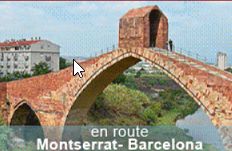
Montserrat, Barcelona
en routeMontserrat- Barcelona
Tower Bridge, London
Skip to content

Churchill : de la victoire sur la France à l’alliance avec elle


Ceux d’entre nous qui ont connu la Seconde Guerre mondiale et se rappellent que Charles de Gaulle, [1] exilé à Londres, fit cause commune avec Winston Churchill pour lutter contre les nazis, et les plus jeunes qui ont étudié l’action de ces deux dirigeants au cours de cette guerre, savent que le Premier ministre britannique de l’époque, Churchill, et le chef de la France libre, Charles de Gaulle, firent alliance (non sans mal) pour vaincre Hitler et les puissances de l’Axe. Cependant, si nous revenons deux cents ans en arrière, nous découvrons qu’un certain John Churchill, premier duc de Marlborough (dont le père était prénommé Winston), devint un héros national britannique parce qu’il vainquit la France. Les deux hommes vécurent dans la même résidence, le Palais de Blenheim.

Cette dernière, construite en Oxfordshire (Angleterre) fut un don que la nation reconnaissante fit à John Churchill pour avoir vaincu la France de Louis XIV (la plus grande victoire britannique depuis la bataille d'Azincourt) et la Bavière à la bataille de Blenheim (graphie anglaise de Blindheim, en Autriche). Près de deux siècles plus tard, Winston Churchill naquit au Palais de Blenheim en 1874.        

                             Photos

Le Palais de Blenheim a été inscrit sur la Liste du patrimoine mondial et attire un grand nombre de touristes.


Tout jeune encore, John Churchill fut un compagnon du roi Jacques II, dernier monarque catholique à régner sur les royaumes d’Angleterre, d’Ecosse et d’Irlande, jusqu’à sa fuite sur le continent, lorsque Guillaume d’Orange envahit l’Angleterre en 1688. John Churchill changea alors d’allégeance et soutint le protestant Guillaume, contre le catholique Jacques II. Lors du couronnement de Guillaume III, Churchill fut élevé au rang de comte de Marlborough. Il participa à la Guerre de succession d’Espagne et dirigea l’armée britannique lors des quatre principales victoires du XVIIe siècle, dont la bataille de Blenheim en 1704.
Ces victoires furent obtenues au prix de véritables massacres.


Connu pour sa cupidité, Marlborough fut soupçonné de prolonger la guerre par intérêt personnel. Le fait est qu’il devint l’homme le plus riche de Grande-Bretagne. Heureusement, son projet d’invasion de la France et de marche sur Paris fut contrecarré, principalement par la reine Anne, qui se brouilla avec l’épouse de Churchill, jusqu’alors sa meilleure amie. Il n’en reste pas moins que la chanson qui lui fut consacrée, Malbrouck s’en va-t-en guerre, continua à faire peur aux enfants français longtemps après sa mort
.


Le nom de Sir Winston Churchill évoque surtout son rôle dans la Seconde Guerre mondiale, mais il obtint aussi le prix Nobel de littérature, principalement pour son livre History of the English Speaking Peoples. [2] Churchill fut aussi l’auteur des quatre volumes d’une biographie de son célèbre ancêtre, Marlborough: His Life and Times.

Au sujet de John Churchill, il écrivit notamment ce qui suit : « Avant Napoléon, aucun commandant n’eut autant de pouvoir en Europe. L’union de près de vingt Etats coalisés était centrée sur sa personne. C’est lui qui assura la cohésion de la Grande Alliance… Il tenait en main les forces des trois quarts de l’Europe. »

Le comte Charles Spencer (frère de la défunte princesse Diana) a également écrit un livre sur le duc de Marlborough, apparemment publié sous deux titres différents : Battle for Europe: How the Duke of Marlborough Masterminded the Defeat of the French at Blenheim (couverture rigide) and Blenheim: Battle for Europe (livre au format de poche).

John Churchill changea l’histoire de l’Europe mais, selon les valeurs de la société occidentale d’aujourd’hui, il est permis de se demander s’il convient d’admirer un homme qui fit la guerre de façon impitoyable et sanguinaire, massacrant un grand nombre de Français innocents. Il faut peut-être établir la distinction suivante entre les victoires des deux résidents de Blenheim Palace : les bains de sang de Blenheim et d’ailleurs en 1704 étaient inspirés par le fanatisme religieux et la soif de pouvoir, illustrant ainsi les instincts les plus barbares du genre humain, tandis que la Seconde Guerre mondiale était, pour utiliser une expression moderne, une guerre nécessaire. Il est néanmoins permis de douter que la guerre mondiale de 1939-1945 soit en définitive la guerre qui mettra fin à toutes les guerres, pas plus que la Première Guerre mondiale ne mérita cette appellation.

Parmi les sources utilisées figure That Sweet Enemy: The French and the British from the Sun King to the Present, Knopf; 1st US Edition (January 16, 2007), Robert and Isabelle Tombs


 Jonathan Goldberg. Traduction : René Meertens.


[1]

De Gaulle:


« Quand j’ai raison, je me fâche. Churchill se fâche quand il a tort. Nous étions donc souvent fâchés l’un contre l’autre. »

De gaulle churchill-1

Churchill


 « De toutes les croix que je dois porter, la plus lourde est la Croix de Lorraine. »

[2] Deux grandes plumes britanniques au service de la liberté

Si vous n’êtes pas un singe, ne travaillez pas pour des cacahuètes

 
27834_119270538091480_117157581636109_222772_5501819_n

ANNONCE AUX TRADUCTEURS ET INTERPRETES


Si vous n’êtes
pas un singe, ne travaillez pas pour des cacahuètes


Rejoignez le mouvement No Peanuts!
for Translators (les traducteurs ne travaillent pas pour des cacahuètes) : http://nopeanuts.wordpress.com/.


Ce groupe international regroupe
un nombre croissant de traducteurs et d’interprètes qui ont un objectif
commun : obtenir une rémunération qui leur permette de vivre de leur travail.
Donnez-nous votre soutien (voir la section « Welcome » du blog No Peanuts!).
Publiez le logo No Peanuts! sur votre site. Nous avons aussi besoin de votre
contribution : articles, infos, opinions… pour les pages Humor (Humour),
Resistance (Résistance), Respect (Reconnaissance) et Translation#Fail
(Traduction#Ratée) du blog No Peanuts! Vous pouvez envoyer le matériel (dans
n’importe quelle langue) à nopeanuts.fortranslatos@gmail.com et visiter notre
blog ou notre page sur Facebook (http://www.facebook.com/NoPeanutsMovement)
pour lire tous les commentaires.


Prétendre à une rémunération qui
permette aux traducteurs et aux interprètes de gagner leur vie n’est pas
juste un slogan. C’est un engagement pour notre avenir.


“Je ne parle pas anglais, un point c’est tout.”

Si vous voulez vraiment énerver un diplomate français, dites lui qu'il va devoir parler anglais à l'ONU, où le français reste l'une des deux langues officielles en activité.

Représentant généralement courtois de la France auprès des Nations
Unies, Gérard Araud, a brièvement perdu son sang froid durant une
conférence de presse des Nations Unies quand il s’est avéré que  les
techniciens de l’ONU n’avaient pas  fourni d’oreillettes permettant une
traduction en temps réel du français à l'anglais. Araud, qui assure la
présidence tournante du Conseil de Sécurité ce mois-ci, a tapé du poing sur la
table, croisé les bras et tapoté des doigts impatiemment.

Il a d’abord refusé les demandes de la presse de poursuivre la
conférence en anglais, une langue qu'il maitrise. « Je ne parle pas
anglais, un point c'est tout », a-t-il déclaré en anglais avant d’ajouter,
cette fois en français : « Soyons sérieux, ce n'est pas comme ca que
ca fonctionne. Il y a 6 langues dans cette organisation, on parle ces six
langues. C'est  inacceptable. »

100202_French80690075b

Quand
il devint évident que les oreillettes n'arriveraient pas, Araud a rapidement
retrouvé son calme et son sens de l'humour, et proposa un compromis: il
répondrait aux questions des journalistes anglophones en anglais et aux journalistes
francophones en français.

"C’est
avec plaisir que je répondrai aux questions en espagnol, en chinois, en français
et en anglais", a-t-il plaisanté.

Reproduit
avec la permission de Foreign Policy www.foreignpolicy.com.
Copyright
2010 Washingtonpost.Newsweek Interactive LLC.


France Defends Use of French as
Language of Diplomacy

Confronted with the increasing use of English, French officials are pushing for
the continued use of French as a diplomatic language at the UN and other
international institutions. Concerns about the declining use of the language
were recently voiced when the French multilingual ambassador to the UN, Gerard
Araud, refused to use English in outlining the program for France's presidency
of the UN Security Council. Former French Prime Minister Jean-Pierre Raffarin
took a similar position in Brussels, where over the past 10 years the European
Union has embraced English as its standard working language. French is still
designated the working language of the European Commission, but its use is
flagging. Others support the use of English as the working language of
diplomacy, seeing it as a tool that could improve the cohesion of the EU.
"English has become a sort of modern day Latin and a rather practical one
on top of it—why resist its ascendancy?" asked French lobbyist Jacques
Lafitte.
Source: American Translators Association

From "Paris Declares War of Words to Keep French as Language of
Diplomacy"
Financial Times (United Kingdom) (02/08/10) Morris, Harvey; Pignal, Stanley

Pardon My French

President Sarkozy vigorously defends French against the onslaught of English but uses some folksy French expressions that would have Victor Hugo turning in his grave.


On the occasion of the International Day of the Francophonie, which took place on March 21, the French President delivered a speech of unusual gusto in favor of spreading the French language throughout the world. At a reception held at the Elysée for 400 guests from the Francophone world, the President denounced the snobbism (or snobbery or snobbishness) of French-speaking diplomats who chose to express themselves in English.

A


“I say what I think. This is not something we can’t change. The Francophonie is a priority for French diplomacy, and all French diplomats should believe that. They are so happy to speak English. If they don’t speak French, why should be expect others to do so.” With a touch of irony, Sarkozy proclaimed the snobbism of those who believe that they show themselves to be intelligent or modern by always choosing English. “We have nothing against English”, he said, “but we want French to remain an international language.”

B


Sarkozy recently requested his personal representative to the Francophonie, former Prime Minister Raffarin, to visit the principal international organizations in order to reclaim the status of French. "Every concession we make will bring another in its wake and [French will] go down the slippery slope to surrender". He condemned the activities of UN representatives who serve in French-speaking countries “without knowing a word of our language.”

Sarkozy strongly suggested that the President of the European Commission, Mr. José Manuel Barroso, should not confine himself to responding in French to questions put to him in French, but should also deliver important speeches in French.

The President’s speech was picked up by the New York Times, in an article entitled "Pardon My French"  introducing its readers to Eric Zemmour, a journalist for Figaro Magazine and RTL, who has written “French Melancholy” (“Melancolie francaise”), just published by Fayard. 

C

Mr. Zemmour is quoted as saying: “The end of French political power has brought the end of French. Now even the French elite have given up. They don’t care anymore. They all speak English.”

Another Frenchman resigned to the growing pervasiveness of English is lobbyist Jacque Lafitte, who is quoted as saying “"English has become a sort of modern-day Latin and a rather practical one on top of it—why resist its ascendancy?"

Mr. Zemmour and Mr. Lafitte should heed the words of Mr. Sarkozy, who regards the process as reversible.

Meanwhile, Mr Sarkozy himself has been criticized by Le Monde for his choice of words in two public incidents in which he spoke in language that was hardly Molierien. The article, dated April 22, is entitled “Après "casse-toi pauv' con", le "fais pas le malin, toi".


For the former expression, the English equivalent might be  “Beat it, asshole”, or “Piss off, you loser” [or “you jerk”] or “butt out, meathead”; while for that of the latter, a rough translation would be  “don’t be a smart-arse*” (UK usage) or  a “smart ass” (USA usage), or a “wise-guy”;  while the addition of the familiar second-person “toi” adds an extra dose  of disrespect. 

One humorist at Radio Suisse Romand has produced a video clip containing an impersonation of Presidents De Gaulle, Giscard d'Estaing, François Mittérand and Jacques Chirac using similar language.


Perhaps we can expect to hear the President, as the embodiment of French culture and the defender of the purity of the French language, use some of these expressions:


" J'suis en pit ", " Lui, c'est un 100 % roro ", " J'ai invité mes sauces au barbecue ", " Laisse tomber, il a toyé tout le monde ! ", " Aujourd'hui je rince un grec ", " Je suis yomb de toi ".

For another view of Sarkozy’s language, see « Sarkozy mot a mot – La Rhétorique du President »

———————

* A « smart arse/ass» is a vulgar version of the term “Smart Alec”, meaning a person who is a smug know-all, someone “too clever by half”. According to one theory, the expression originated with Alec Hoag, a New York confidence trickster. According to another theory, “Smart Alec” is one of several names, such as Clever Dick, used as catchwords to describe people who are conceited, self-opinionated or ostentatiously and irritatingly knowledgeable.

Jonathan Goldberg

Don’t Ask, Don’t Tell, known as DADT

By Jacquie By
Bridonneau,
2BTraduction, Member
of the American Translators Association and of Trans'missions Europe

No, this is not a variation on the “Show and Tell”
activities we all conducted when we were in grade school. Nor is it some kind
of new poker game, as it may sound like. Don’t
Ask, Don’t Tell
is a catch-phrase coined in the United States under the
Clinton Administration to encapsulate US military policy regarding the
admission of gays or lesbians into the fighting forces.  The policy it reflected (Don’t Ask, Don’t Tell, Don’t Harass, Don’t Pursue in its full name)
was passed into Law back in 1994. This legislation achieved a compromise
between those wishing to maintain the policy of banning men and women with
same-sex or bisexual orientation and those who favoured admitting them to the
armed forces. Under the new legislation, gay and lesbian conscripts could no
longer be questioned about their sexual preferences (Don’t Ask), but were
prohibited from disclosing their sexual preferences (Don’t Tell) and would not
be discharged solely on the grounds that 
they were gay (Don’t Pursue).  Engaging
in sexual acts with members of the same sex would still be grounds for
discharge from the military.

The act prohibits any homosexual or bisexual
person from disclosing his or her sexual orientation or from speaking about any
homosexual relationships, including marriages or other familial attributes,
while serving in the United States armed forces. The "don't ask" part
of the policy indicates that superiors should not initiate investigation of a
service member's orientation in the absence of disallowed behaviors, though
credible and articulable evidence of homosexual behavior may cause an
investigation.

The roots of same-sex prohibition in the US armed
forces date back almost to the founding of the USA. It was intended to regulate
who could serve in the US army, and under what conditions, along racial and
sexual lines.  Way back in the
Revolutionary War, blacks were not allowed to serve in the Continental army,
and later, during the Civil War, they were also barred from military service,
even though there were many volunteers. 
These decisions were later reversed, especially when the British offered
freedom to slaves who agreed to serve.

As a consequence, more and more blacks entered
military service, but it took a long time for them to be treated as equals to
whites.  In World War I, African-Americans
usually did not fight alongside their white counterparts, and served in menial
jobs.  In World War II, there was often
segregation, with black units having black officers, but this situation
gradually changed as it was recognized that African-Americans could fight just
as well as their white fellow citizens. 
And this is where the DADT act comes in: 
it too reflected a growing liberalization of attitude on the part of the
military authorities.

In the early 80s however, this decision was reversed
by the Department of Defense (DOD) with a new policy that clearly stated that
homosexuality was incompatible with military service, leading to some 12,000
people being discharged for that reason. 
This of course, came as a huge financial cost to the national budget,  with severance pay and training of new
recruits, not to mention the loss of precious Arabic language translators and
interpreters.  By the end of the decade
however, advocates of gay and lesbian rights began to challenge this policy, until
finally President Clinton and his government reached his DADT compromise.  And compromise is the key word here – on one
hand, gay people could not be discharged just because they were gay, as long as
the sexual orientation of the person in question did not become known to the
authorities or to fellow-soldiers. The new  law never really worked properly, and it satisfied
no one.

President Obama, pledged to repeal DADT in  his presidential campaign pledge to repeal
this act and to remove all restrictions on the conditions under which gays and
lesbians could serve. In n his State of the Union address at the end of
January, 2010, openly called for the State to repeal this policy. “[We must]
repeal the law that denies gay and lesbian Americans the right to serve the
country they love because of who they are. It's the right thing to do,"
Obama said.

At the end of March, the Pentagon issued regulations
limiting the cases in which gays could  be dismissed from the US military, while
waiting for a congressional debate on this subject.  In this new situation, only high ranking
officers will be able to initiate and oversee investigations, and evidence may
no longer rely exclusively on hearsay.

Army Secretary, John McHugh did
however state: “Until Congress repeals ‘don’t ask, don’t tell,’ it remains the Law
of the land and the Department of the Army and I will fulfill our obligation to
uphold it.”  And the Secretary of
Defense, Robert Gates, who favors the eventual repeal of the ban on gays
serving openly in the military, has asked Congress to give troops a chance to
express their views as the Pentagon studies potential changes. He wants the
Pentagon to first finish its review of the effect of any potential changes and
develop an implementation plan.

For a view favoring
further liberalization, see the Huffington Post:

What the Changes to DADT Mean:
The Good, The Bad and the Politically Dangerous


Des expressions de tous les jours nées au Parlement britannique

L’heure des élections a sonnée au Royaume-Uni, des
élections marquées par les premiers débats entre les leaders des principaux
partis. Ces débats suivent le modèle américain initié en 1960 par John F.
Kennedy et Richard M. Nixon.
Voici une vidéo du premier débat de la campagne
électorale de 2010 et la 1ère partie du premier débat durant la campagne
présidentielle de 1960.

Le site du Museum of Broadcast
Communications propose une revue historique sur les débats de 1960.


Vous pourrez également trouver une version humoristique
du récent débat à la fin de cet article.
Voici quelques expressions courantes en anglais qui
viennent de termes employés au Parlement britannique.


D'après l'article "Mind Your (Parliamentary) Language" de David Porter et avec sa permission.

Peu de gens savent que certaines expressions anglaises que nous utilisons tous
les jours sont nées dans la Chambre des Communes britannique.

Le Parlement
britannique est le plus vieux du monde et au fil des ans, il est à l’origine de
nombreuses expressions auxquelles on attribue souvent un sens différent. Alors
qu’approchent les élections législatives, voici un aperçu de quelques-unes de
ces expressions.


It's in the Bag
(L’affaire est dans le sac)

Derrière le
fauteuil du Président de la Chambre des Communes et à l’abri des caméras se
trouve un grand sac dans lequel les députés placent les pétitions devant être
examinées par la Chambre des Communes ou par le gouvernement.

De nos
jours, pour arriver au Parlement les pétitions doivent suivre une certaine
procédure et bien qu’elles soient ensuite officiellement publiées, elles sont
rarement reconnues comme étant d’une importance capitale et encore moins
débattues comme il se doit.

Cependant,
il y a plusieurs siècles, un député à qui on aurait présenté une pétition
pouvait affirmer en toute honnêteté à ses électeurs que, oui, il avait attiré
l’attention du Parlement sur tel problème, que tout allait être arrangé car en
effet… l’affaire était dans le sac !

Toe the line (Ne pas dépasser les limites)

Dans le langage
courant, cela signifie que l’on doit obéir à une règle comme tout le monde, qu’il
y a une ligne/limite invisible que personne ne devrait franchir.

Au Parlement
britannique, cette ligne n’est pas seulement métaphorique.  La Chambre des
Communes, une longue salle rectangulaire, est aménagée de façon à opposer les
deux partis principaux, et deux lignes rouges parallèles la traversent,
séparées par quelques mètres.

Les députés
doivent s’exprimer depuis leur côté de la ligne et ne pas la franchir, sous
peine d’être sévèrement rappelés à l’ordre. Ils ne doivent pas dépasser les
limites !

 The Whip (Le Whip, lit. Fouet)

Ce terme
vient du vocabulaire de la chasse du XVIIIème siècle. Le « whip »
désignait alors la personne qui s’occupait de ramener les chiens égarés dans la
meute à l’aide d’un fouet.

Il y a 2
Whips dans chaque Chambre du Parlement britannique, l’un étant fidèle au
Premier Ministre, l’autre au leader de l’opposition. Ils jouissent d’un certain
pouvoir auprès des députés et doivent s’assurer que ceux-ci soient présents
lorsqu’un vote a lieu. Autrement dit, ils font respecter la discipline de parti
comme s’ils avaient un fouet en main.

Un député
important a dit d’eux qu’ils sont « aussi indispensables que les
toilettes ».

« Accepter
le fouet » veut dire, appartenir à un parti et en accepter les règles.

Les whips de
chaque parti transmettent à leurs députés un bout de papier signifiant que leur
présence est requise à une session parlementaire. Un seul trait (whip) veut
dire que la présence du député et son vote sont facultatifs.

Si le papier
est souligné deux fois, le député doit être présent à moins d’arranger une
« paire » avec un membre du parti opposé.

Trois lignes
indiquent qu’il est absolument impératif de venir et de soutenir le parti.
Aucune excuse ne sera acceptée, pas même un voyage à l’étranger ou être sur son
lit de mort.


 Laura
Vallet

Texting, sexting, chexting, brexting et exting – des mots novateurs anglais

Ce billet a été rédigé par Jonathan Goldberg et traduit en français par René Meertens.

Texting (ou txting) est une abréviation de text messaging, c’est-à-dire l’envoi d’un SMS d’un téléphone portable à un autre ou du Web à un portable. Les MMS, souvent utilisés pour l’envoi de photos, permettent aussi de transmettre des messages qui dépassent les 160 caractères auxquels les SMS sont limités.

Le mot texting est également utilisé comme adjectif, par exemple dans l’expression texting code (code des textos). Il faut aussi mentionner le verbe to text (rédiger un SMS).


Selon wiseGeek.com, le premier SMS commercial fut envoyé en 1991, d’un ordinateur à un téléphone portable. Par la suite, l’envoi de SMS a mis du temps à se répandre et, même vers le milieu des années 90, ce mode de communication n’était guère utilisé en Europe. En 2000, des textos étaient envoyés occasionnellement en Europe et en Asie, mais rarement aux Etats-Unis. Cependant, un an plus tard, les SMS avaient décollé et leur nombre se mit à se multiplier de façon exponentielle pour dépasser 250 milliards.

En 2008, le gouverneur de la Californie, Arnold Schwarzenegger, a promulgué une loi qui interdisait la rédaction de textos au volant, mais elle est restée en grande partie lettre morte, bien qu’elle prévoie une amende de 20 dollars pour la première infraction et de 50 dollars pour chacune des infractions suivantes.

Voici une brève vidéo destinées aux jeunes, qui met bien en évidence le risque de la rédaction de textos au volant : 


La police galloise en a produit une autre, qui fait passer le même message de façon percutante et assez horrible :


Sexting, mot valise composé de sex et de texting, désigne la diffusion de messages à caractère sexuel sur des téléphones portables et Internet. Il s’agit bien souvent de jeunes qui envoient à des amis ou à des inconnus des photos et des vidéos qui les représentent eux-mêmes. De telles images circulent au moins depuis 2005. Selon une enquête dont les résultats ont été rendus publics en septembre 2009 par l’association caritative britannique Beatbullying, 38% des adolescents de moins de 18 ans ont reçu une image à caractère sexuel choquante ou pénible à regarder par SMS ou courrier électronique.

Une vidéo montre les conséquences tragiques d’un cas de sexting:


Le mot chexting a été inventé par UrbanDictionary.com en 2008. Il est « une fusion des mots cheating et texting, et désigne une infidélité qui s’accompagne de l’envoi de textos ». Deux célébrités, le golfeur Tiger Woods et une personnalité de la télévision, Jesse James, se sont fait prendre alors qu’ils se livraient au chexting.


Stacy D. Phillips, avocate de Los Angeles spécialisée dans les affaires familiales constate que, dans un nombre croissant de divorces, un conjoint infidèle utilise les moyens modernes de télécommunications, en particulier les salons de tchat, les messages instantanés et les textos.

CBS a abordé cette question : 


Un article récent de Reuters emploie un nouveau mot, to ext (quitter): « Don’t be fooled into thinking you're safe. If you've sexted and chexted, you might soon be exted by your spouse." (Ne vous imaginez pas que vous pouvez tout vous permettre : si vous avez envoyé des textos torrides et si votre infidélité a été ponctuée de SMS, votre conjoint pourrait bien vous quitter).

Enfin, d’après worldwidewords.org, brexting consiste à rompre par texto.

Post Scriptum: A Girl’s Nude Photo, and Altered Lives, Herald Tribune, March 27, 2011 

He Sexts, She Sexts More, Report SaysNew York Times, July 15, 2011


Feature: French humour every which way

Those foreigners who make the French laugh

Humou1

The French are not chauvinists when it comes to laughter. They even reserve a special welcome to the different forms of humour that come from other countries, from the English to the Italians by way of Americans, French Canadians, Belgians and all French speakers. A brief tour of the scene.

Didier Jacob, journalist on the weekly magazine Le Nouvel Observateur

We all know that humour was born in England. But as early as 1762, Voltaire observed that the British use this word, "that they pronounce "youmor"" and "believe they are the only people who have it, that other nations have no word to describe this character of spirit" that they patented from the beginning of the 18th century through the voice of Laurence Sterne, author of the masterpiece of English literature, Tristram Shandy (1759-1767), or that of Jonathan Swift, Gulliver’s creator.

As pioneers, in France even today, the English are still considered masters of the genre. We still read Lewis Carroll, a surrealist before his time with his Alice in Wonderland (1865), Charles Dickens and his penchant for the burlesque and eccentric, Oscar Wilde, sardonic depicter of the manners and morals of the British aristocracy, not forgetting Jerome K. Jerome, whose hilarious Three Men in a Boat (1889) gave the picaresque novel a new youth. We must not forget the comical self-mockery of P.G. Wodehouse or, more recently, the novels of David Lodge which go down very well in France, a consummate satirist who ridicules contemporary British society like no other.

The masters of British humour

British film and television comedians also have their fervent admirers in France. The cast of Monty Python, which seemed to have been inspired equally by Rabelais and the Marx Brothers, have perhaps had the strongest influence on the new French comics, through their crazy and fast-paced sketches for the BBC in the 1970s or their film parodies (Monty Python and the Holy Grail, 1975, The Meaning of Life, 1983).


More recently, we have roared with laughter at the antics of the infantile and feather-brained Mr. Bean on the television, played by Rowan Atkinson, while the off-the-wall series Absolutely Fabulous, by and with Jennifer Saunders, giving a rough ride to several French icons of the fashion world amongst other things, has plenty of fans over here.


The British comedy revival has also been a triumphant success, whether romantic or riotous, from A Fish Called Wanda (1989), with two former members of the Monty Python team, to Love Actually (2003) by Richard Curtis, the subtle screenwriter of Four Weddings and a Funeral (1994) and Notting Hill (1999), not forgetting The Full Monty (1997) and Chicken Run (2000).


It is difficult, however, to say whether it is British humour or American comedy that the French enjoy most. It was the Americans, after all, who invented deadpan comedy with the English-born Charlie Chaplin and Buster Keaton, and displayed, with the Marx Brothers, an astonishing talent for total lunacy.


Alongside influential comedies enjoying worldwide success (from Spielberg to Jim Carrey), France likes those American film-makers with a more personal and laid-back humour, whether poetic, or frankly burlesque or satirical – from Woody Allen’s early work (Bananas, 1971), the Coen brothers (Arizona Junior, 1987, Fargo, 1995), Tim Burton (Beetle Juice, 1988, Mars Attacks!, 1996) and the Farrelly brothers (There’s Something About Mary, 1998, Stuck on You, 2003), to the amazing animations, both comically and technically, of the Walt Disney and Dreamworks studios (Toy Story, 1995, Finding Nemo, 2003, Shrek 1 and 2, 2001 and 2004) which clearly show the extent to which laughter, in today’s Hollywood output, can be a huge weapon of persuasion. Nor has France escaped the craze for cult television series, such as Friends, Seinfeld or Sex in the City.

Laughter, a huge weapon of persuasion


A feeling for comedy is not, of course, the prerogative of the British and Americans. It is impossible to mention all the humorists who have an audience in France. Nonetheless, the community of laughter is international: it is the fraternity of nations who share a common language – the language of humour.

Source:  diplomatie.gouv.fr

Viktor Lazić – linguist of the month of April, 2020…

…as well as attorney, library curator, author, story-teller and tourist guide

Viktor cropped

Jonathan blue shirt snipped

Viktor Lazić
Interviewee


Jonathan G.
Interviewer

 EXCLUSIVE INTERVIEW –
conducted by Skype between Los Angeles and Belgrade

Lazik - LA - Belgrade

JG: Before we speak about the two incredible family libraries that have been in your family for 9 generations, (and which now also serve as museums) would you introduce yourself?

VL: I am 35 years old. I live in Belgrade.  Previously I had a translation agency. (I am still a member of the Serbian Union of Scientific and Technical Translators.) I speak English, German and Russian and of course my mother tongue, Serbian. Today I am a practicing lawyer, specializing in corporate law and the restitution to their former owners of properties confiscated by the Communist regime.  I am currently working on a doctorate degree in the field of Chinese law: "Confucianism and Legalism as the dominant schools of Chinese law".

JG: You are also an author.

VL: In addition to my law practice, my academic pursuits, my extensive travels (to 90 countries on six continents), and my work in running the museums, I am a member of the Association of Writers of Serbia and a licensed tour guide. It has been my family tradition for many generations to have multiple degrees and professions. It has been used as a safeguard against the instability of life in the Balkans.

JG: Which books have your written?

VL: Lazik - book coverI have written 6 books and about 1000 articles in Serbian, mostly about travel, but also history. In my book, "The Great Adventure.", translated into 6 languages, I describe my journey of 421 days made in 2009/2010. I Lazik - Africa 2
 went from Kosovo to the North Cape of Africa and continued to Russia, then on to North Korea and Australia, and then I drove back to Serbia from Vladivostok, crossing the Gobi Desert on my own. Particular media attention in the Balkans was drawn by my description of the life of pirates in Malacca Straits, life of believers of sects of the self-proclaimed Jesus, Vizarion, in Siberia, and the life of ex-cannibal tribes and matriarchal tribes in Indonesia.  

JG: Where did you acquire your excellent command of English.

VL: I spent several months every year visiting an aunt in London. When I was 14, my country was at war and my city was very badly bombed. In the course of the bombing, my home was damaged, and my parents decided to send me to my aunt. After the horrible, 10-day ordeal of leaving Belgrade on which bombs were raining down, crossing a bridge that was bombarded only minutes later and dealing with unfriendly Hungarian officials on the other side, I arrived in London and stayed there for 5 months.

JG: Your love of books began at a very early age.

VL: I began writing poetry at the age of 6 years. At 8, I made an inventory of the family library, and at 12 I had 2000 books in my bedroom. Since childhood I dreamed of continuing the family tradition by creating an institution to maintain and expand the library, something that my family already tried to achieve before. I realized then that there were many family friends, famous writers and families owning large libraries and archives, who no longer had trust in state institutions but at the same time had no place to store their collections and needed to entrust their treasures in a safe place.


  Lazik surrounded by books  
  Viktor Lazić = bibliophile par excellence  


JG: Moving on to the collection of books that were handed down from generation to generation in your family, and the owner of which is now a cultural foundation [1] of which you are the President, tell our readers about its current situation, and then we can then talk about its fascinating history, and about some of the unusual items in it.

VL: We estimate that the collection contains at least one million books. The collection serves both as a library and museum – divided into two parts, one containing books of Serbian literature and the other books, manuscripts, typewriters, etc. from all over the world. Most of the books are offered for reference purposes only and may only be read in situ in our reading room. At the moment capacity of the reading room is only 8 people but we plan to expand its capacity to 60 readers soon. But to a large extent, it is a museum, which attracts visitors from all over the world. The intake of books, which are often donated from other libraries that are closing or from individual collections, is about 5000 per week. Many of the books donated are not suitable, and we give them to other libraries.

JG: Are the visitors mostly librarians or scholars?

VL: No, many groups of children visit us, and it is our educational aim to open their eyes to books of many kinds, from far-off places, as well as other items of interest. It is an exciting way to spread knowledge, love and tolerance. But many experts from all over the world also come to use our material. Just recently we allowed researchers from Humboldt University (Berlin) to use one of our archives.

  Lazik (AO1)  


JG: The collection contains not only traditional paper books, but those written on bamboo sticks, silk and sheep fetuses or made of elephant excrement. Could you explain how and why these unusual materials are used for “books”.

VL: One of our aims is to showcase the history and richness of the world. This is why we brought books from all over the world, especially trying to obtain unusual books that bear witness to the diversity of the human mind. For example, we have books made on rice paper so that they can be eaten if the reader is hungry! These were traditionally done in China, where fear of hunger is deeply rooted in people’s minds. Or books from Thailand, created from the dung of elephants that Thai people still sometimes keep as pets at home! … Or tribal books on palm or banana leaves. We even have books with covers made of what were probably human bones…

Lazik - typewriter cropped

Lazik - Rare_books_and_artifacts _Adligat _Belgrade

Books are just the beginning. Typewriters and other literary objects are part of the collection too. MOMIR ALVIROVIC / COURTESY ADLIGAT 


JG:
You have a manuscript signed by Napoleon Bonaparte.  What is the story behind this item?

VL: I was in Parma, Italy, last year with an old friend of mine, a French woman from a noble family. We visited a museum dedicated to Marie Louise, Napoleon’s wife. My friend asked me what object in the museum my first choice would be to add to the museum’s collection. There were original Napoleonic objects around us, and I expressed my admiration of Napoleon, and of his famous Code, in particular, as I am a lawyer too. I stated that it would have been so amazing if we ever obtained any object related directly to Napoleon… After only a few months this lady found an original Napoleonic document and donated it to us, but she insisted on remaining anonymous. Behind the document is the story of Bernard Radelski, a Slavic soldier, either Russian or Polish, who most probably deserted the Russian army. We can only assume this, as the document states that he was a member of French military but belonged to the special unit comprised of ex-enemy soldiers, either war prisoners or deserters. Obviously that man did not like war, because he ran away from the French army too! Lazik - CambaceresUnfortunately, he was caught, tried and sentenced to 16 years with a prison stone tied to his leg, and he was ordered to pay a huge fine… Later the Emperor pardons him. The original document containing the pardon joined our collection. One interesting facet of the story is that the pardon reveals how bureaucratic the French state structure was, because even this simple pardon had to be signed not only by the Emperor, but also by his Ministers and Chief of Cabinet… So we have three more signatures on the document, those of Jean Jacques Régis de CAMBACERES, Hugues Bernard MARET and Claude Ambroise REGNIER – all of them extremely important people in their time. Mr Regis de Cambaceres is actually the real author of Napoleon Code, and he presided over the special commission that created the final version of the Code!

JG: Which other signatures do you have of famous Frenchmen?

VL: Our collection of books in French language and about France has more than 300.000 titles! French Revolution and French culture had significant impact on Serbia, and we are proud of this connection. Our First World War collection is especially important and has a strong connection to France. Of great significance are four documents signed by French kings – Louis XIII, Louis XIV, Louis XV and Louis XVI. This collection was bought for us by one donor, but it has not yet arrived in Serbia. We are also proud to have a small collection of Jacques Prevert signed editions and photographs, a donation by the famous Serbian journalist Kosta Dimitrijevic, who actually met Mr. Prevert and interviewed him.

JG: You also have the handwritten letters of Nikola Tesla, the iconic Serbo-American inventor, electrical engineer, mechanical engineer and futurist, best known for his contributions to the design of the modern alternating current (AC), electricity supply system. What are the contents of these letters?

VL: Tesla PupinaMihajlo Pupin, like Tesla, was a Serbian-American inventor, and holder of the Pulitzer prize, one of the most important American inventors of the 20th century, thanks to whom the phone and radar became useful instruments. Both lived in the USA. Tesla’s letters to the General Consul of the Kingdom of Yugoslavia in New York, written three months before Pupin’s death, express great concern for Pupin’s poor health, rebutting previous rumors about their hostility. The relationship between those two giants is very important in the history of science and especially for Serbia. in 20 countries, in 10 languages (including the New York Times and the Washington Post). [2]


JG: The book collection was started by your ancestor in 1720 and opened to the public in 1882. It has undergone the vicissitudes of two world wars and many upheavals in Serbia and elsewhere. The stories you tell about some of these events could fill a book. In fact, you have agreed to write an article for us containing the story of how the library was tended for more than 50 years by your illiterate grandmother, who, in her old age, designated you as its heir. For present purposes please relate the efforts made by your great grandfather to save books during WW1.

VL: My great-grandfather Luka Lazic (1876-1946) was a true booklover. He spent most of his time reading or visiting the library that his father had opened to the public by in 1882. In 1908-1910 Luka Lazic took over the library. The family lived in small northern Serbian town, Kumane, which was then in the territory of the Austrio-Hungarian Empire, and he was conscripted to the reserve troops of the Austrian army. Once Austria-Hungary declared war on Serbia, he would have had to fight against his own nation. So he decided to run away, to

Lazik - emperor

The entry of Emperor Francois-Joseph into Belgrade, by Frederic de Haenen, 1914

overtly cross the wide Danube river, and to join the Serbian troops. But he was concerned about the fate of the books back home, afraid that some Austrian officials or military personal might enter his home and destroy or remove them. So he asked his wife Marta to stich his favorite, most valuable books into his jacket. The jacket was a very thick Hessian fabric, with a thick layer of sheep wool, which was perfect for putting objects inside it, and he chose 6 books to be stitched into the jacket. But he could not have known what awaited him. When Serbia was attacked from all sides at the end of 1915, the Serbian Command decided not to surrender, but instead to retreat in the middle of winter through the Albian mountains, in some of the highest, most unfriendly European territory, hoping to reach the Adriatic coast and be rescued by Allied ships. Many civilians joined the retreating Serbian army, fearing enemy revenge. Most of the 1.1 million Serbian victims of the WW1 died in this ordeal, considered to be one of the worst tragedies of this war, particularly for the Serbs. [3] Luka marched for hundreds of kilometers, through snowy mountains, fighting the enemy and withstanding the wind and cold, until he arrived at the Duress swamp more dead than alive. When allies sent ships to transfer the remaining Serbian soldiers to the Greek island of Corfu, a new drama awaited Luka – he boarded a ship that was soon hit by torpedo. He survived but had to jump into water to save a friend. Only one book survived this incident. However, what is even more

Lazik - digitized newspapers

These rare Serbian newspapers from World War I are among the works digitized by the Belgrade University Library, under a grant from the British Library’s Endangered Archives Programme. MOMIR ALVIROVIC / COURTESY ADLIGAT

incredible is that once Luka arrived in Corfu, he continued to collect books… Our books and other materials published during the war that the soldiers were reading while waiting to fight, or even during fighting, are exceptionally rare. We received a grant from the British Library (in cooperation with the Svetozar Markovic University Library) to digitalize the collection under the world program designated for Endangered Libraries and Archive. Digitalization.


JG: To end this interview, I would like to quote Adam Sofronijevic, of the Belgrade University Library, who said about your museum. “These stories are fascinating. They tell us a lot about Serbian society and culture,” It is a story of book-loving, book-keeping, and extraordinary enthusiasm.” Moreover, your uncle Milorad Vlahovic has said “This is in Viktor’s blood,” “He was always obsessed with the collection. We are happy and proud that he has done this for the library, for the family, for the country.”

VL: I wanted to build a safe haven—a place where people of culture could entrust what’s valuable to them. My success is due to the fact that people trust me and my project as evidenced by the fact that 40 persons have donated their entire legacies of books, documents and cultural objects, while more than 300 donated their libraries in whole or in part. Support from State institutions has also been remarkable, and it demonstrates recognition of the fact that we are in a better position than the State to maintain this important project It is the fruit of work invested by nine generations of my family, and important to the nation. We hope to preserve it for many years to come.

[1] ADLIGAT Society for Culture, Art and International Cooperation
Museum of Serbian Literature Book and Travel Museum 
Josipa Slavenskog 19a, 11.040 Belgrade – Banjica, Republic of Serbia 
+381 11 36 72 807+381 63 360 218+381 63 88 54 927
muzejknjige@gmail.com

[2] « NEWS ON DISCOVERED TESLA’S DOCUMENTS ECHOED AROUND WORLD

[3] Richard C. Hall (2014). War in the Balkans: An Encyclopedic History from the Fall of the Ottoman Empire to the Breakup of Yugoslavia. ABC-CLIO. ISBN 978-1-61069-031-7.

“Why Translation Matters”, d’Edith Grossman

Ce
billet a été rédigé par Jonathan Goldberg et traduit en français par René
Meertens.

Edith Grossman est une traductrice littéraire réputée, qui a traduit des œuvres
de grands auteurs d’expression espagnole, telles que Don Quichote, de
Cervantes, Mémoire de mes putains tristes, de Gabriel Garcia Marquez, et
La Fête au Bouc, de Mario Vargas Llosa.

Edith Grossmann a elle-même écrit Why Translation Matters, qui vient
d’être publié dans la collection Why X Matters de Yale University Press
(http://www.amazon.com/Why-Translation-Matters/dp/0300126565/ref=sr_1_2?ie=UTF8&s=books&qid=1270951421&sr=8-2).

Cet éditeur présente ce livre comme suit :

Why Translation
Matters
souligne l’importance culturelle de la traduction et la nécessité
d’apprécier le rôle du traducteur de façon plus globale et plus nuancée. Comme
l’éminente traductrice Edith Grossman l’indique dans l’introduction, « Je
souhaite favoriser un réexamen d’un domaine de la littérature qui est trop
souvent ignoré, mal compris ou décrit de manière inexacte »

Pour Edith Grossman, la traduction revêt une importance fondamentale : « La
traduction non seulement joue son rôle traditionnel de moyen d’accès à une
littérature initialement écrite dans l’une des innombrables langues que nous ne
comprenons pas, mais elle représente en outre une présence littéraire concrète
qui facilite et rend plus significatives nos relations avec des êtres auxquels
nous n’étions peut-être pas liés auparavant. La traduction nous aide toujours à
connaître des réalités qui ne nous étaient pas familières, à les considérer
sous un angle différent et à leur attribuer une valeur nouvelle. Les nations et
les individus doivent absolument accéder à cette compréhension et à cette prise
de conscience. Il est inconcevable de s’en priver. »

D’un bout à l’autre des quatre chapitres de cet ouvrage stimulant, Edith
Grossman met en évidence l’importance cruciale du travail du traducteur et
explicite de façon pénétrante l’univers intellectuel de l’interprète du texte
original. Ce faisant, elle exhorte le lecteur à aborder la traduction d’une
façon entièrement nouvelle.

Une critique intéressante de ce livre, parue dans le New York Times Sunday
Book Review
du 11 avril dernier, est reproduite à cette adresse : http://www.nytimes.com/2010/04/11/books/review/Howard-t.html?ref=review.

Par ailleurs, Edith Grossman participe avec d’autres traducteurs à une vidéo
d’une durée de deux heures intitulée The World of the Translator (http://www.youtube.com/watch?v=v-2t0go72xc).