



Après une pause, Le mot juste en anglais est de retour — sauvé des archives d’Internet et entièrement reconstruit. Nous sommes ravis d’être de retour et reconnaissants que vous nous ayez retrouvés. Mais soyons honnêtes : nos portes sont ouvertes alors que nous sommes encore en train de réparer le toit. Il se peut que certaines images manquent, que quelques anomalies de mise en page datant de nos années sur TypePad soient encore en cours de correction, et qu’un lien rompu que nous n’avons pas encore repéré se cache quelque part.
Le mot juste en anglais a été créé il y a environ 15 ans afin d’ouvrir une fenêtre aux lecteurs français intéressés par la langue anglaise – avec toutes ses singularités et ses difficultés – et, plus généralement, par la culture du monde anglophone. Le blog avait pour vocation de servir de passerelle linguistique et culturelle entre le monde francophone et le monde anglo-américain. Ces dernières années, le blog a fait une pause (en partie à cause de la fermeture soudaine de Typepad, la société qui fournissait le logiciel). Nous sommes actuellement en train de remettre en ligne Le mot juste en anglais (ainsi que notre blog en anglais Wordsmiths Blog), afin que les internautes puissent accéder à l’importante collection d’articles existants, même si nous ne publions plus de nouveaux articles aussi fréquemment qu’auparavant.
À propos de Jonathan Goldberg
Votre bloggeur fidèle est traducteur et interprète assermenté auprès du Judicial Council of California (hébreu/anglais, français/anglais). Il a vécu sur quatre continents et a passé un an à Paris, où il a obtenu un diplôme en Civilisation française de la Sorbonne – un cas d’opsimathie, vu le fait qu’il n’a jamais appris le français à l’école ni pendant ses années d’études précédentes en droit. Il a été membre du Barreau d’Afrique du Sud et du Barreau d’Israël. Il a traduit en anglais RÉVOLUTION d’Emmanuel Macron.
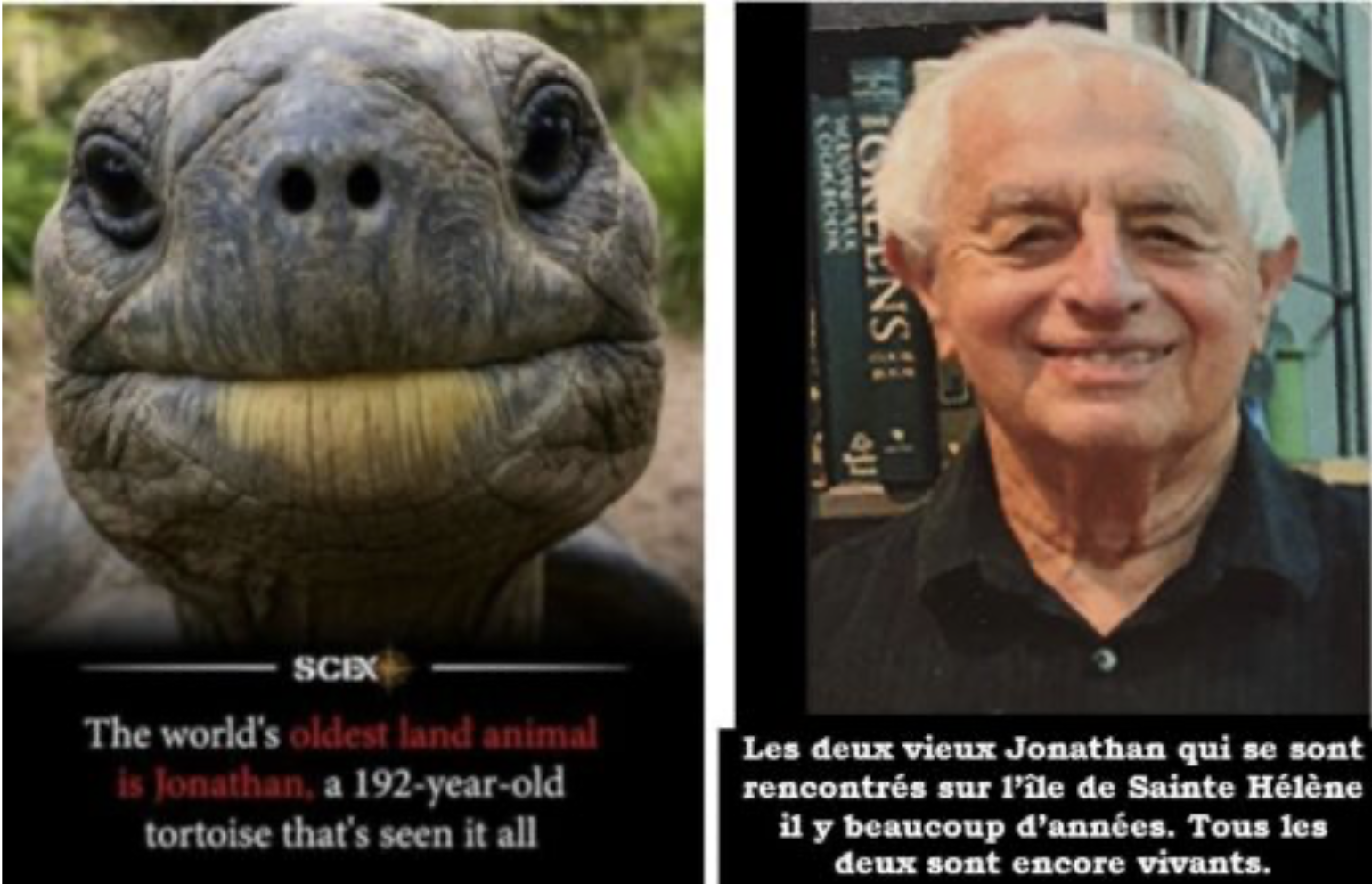
Il ne faut pas le confondre avec un autre Jonathan encore plus ancien – la tortue (âgée de 192 ans), le plus vieil animal terrestre du monde, en confinement sur l’île de Sainte-Hélène (comme Napoléon autrefois). Les deux (Jonathan & Jonathan, et non Jonathan et Napoléon) se sont rencontrés lors d’une visite de l’île effectuée par votre bloggeur.