L'article suivant a été écrit par l'écrivain britannique Magdalena Ball spécialement pour Le Mot Juste en Anglais.
Introduction
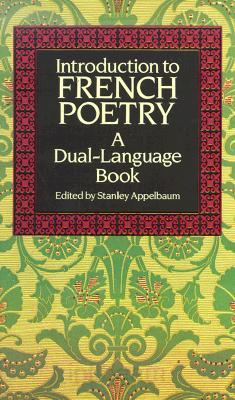
to French Poetry:
CD
Edition
By
Stanley Applebaum (Editor)
Dover
Publications
Paperback:
192 pages, June 1, 1991, ISBN-10: 0486267113, ISBN-13: 978-0486267111
Poetry is
almost impossible to translate. You may
get the gist of the thing, but unless the translator is also a poet (and in
that case, you’re getting a different poem to the original), you lose the
nuance, the rhythm, the subtle linguistic play.
Reading poetry in any language is an advanced linguistic activity. It isn’t really for beginner language
learners, because of the way it pushes language to its limits, puns, flows,
uses double entendre and sophisticated innuendo. There are so many beautiful poems written in
other languages, and it seems a shame to limit ourselves only to those poems
that are written in the languages we’re fluent in. The answer is in dual-language books like Introduction to French Poetry which
allow us to still access the meaning in our own language, but experience the
rhythm, expression, and beauty of the orignal. In the case of this one,
there’s an accompanying CD with each poem beautifully read by French actor
Michel Moinot, who enunciates every word so perfectly that it’s easy to follow
along and even begin to fall into the flow of the grammar and syntax. With the printed poems in both English and
French open at the same time as you listen to it in French, it’s almost
possible to bridge the language gap and experience the original.
For those
learning French, this is an excellent way to increase vocabulary and learn the
pronunciation. Moinot’s richly expressed readings will help with fluency and
tone, and the overall choice of poets and simplicity of the poems will
encourage further reading and a stronger understanding of the history and
progression of French poetry. For those
who are interested in the poetry itself, there are 30 tracks, with only one or
two poems by each poet. This kind of
survey does show provides a sense of the different types of verse, from the rondeaux of Charles D’orléans, the sonnets
of Louise Labé, to the wonderful epistles of Voltaire, the start of romanticism
with the bleak fervour of Victor Hugo, the rich imagery of peotic giants
Baudelaire, Mallarmé, Verlaine and Rimbaud, towards the more modern work of
Apollainaire, Éluard, Aragon or Bonnefoy.
It’s a rich and heady mix, diluted only by the fact that there is, at
best, only two poems from each poet (some have only one), which is but a mere
scratching on the surface of what each of these poets has produced. If it creates an itch though, as it is sure
to do if the reader/listener is able to hear the power and beauty in most of
these poems, that can only be a positive thing, as there are plenty of volumes
waiting to be explored, many in dual-language form.
The poems
are each prefaced with a brief summarised biography of the poet, including a
portrait wherever possible. Compiling
this book would have been no easy task, and Applebaum has done a good job of
putting each work into context and choosing the most accessible, easy to follow
poem, with the least amount of ambiguity. The accompanying CD, is worth the
price of the book alone, as it’s only by listening to the work read by an
expert speaker where the rhythm and intonation comes out. What is a surprise, for me at least, is how
much humour, playfulness, and lightheartedness there are in even the most
intense of poems (and nobody does intense like the French Romantics). A recurring theme throughout many of the
poems (and maybe poetry in general) is the juxtaposition of youth and beauty
and mortality, decrepitude and death. Heavy
as the subject is, few of the poems become maudlin, and less so when heard
spoken with just a hint of detached irony, and the delicate musicality that is
altogether lost in translation. Listening
and reading simultaneously works wonderfully well and gives a complete poetic
experience. Of course, as Applebaum
clearly states in his introduction, this is really just the tiniest taste. Each of the poets represented has a complete
oeuvre which is significantly more wonderful than one or two poems can
show. Nevertheless, Introduction to French Poetry provides a lovely and well-structured
overview which will help show the relationship between poets – how one
historical movement gave rise to another, as well as to provide a beginner’s
sense of the many different styles and symbols of the poetic giants who shaped
the French poetic landscape. Introduction to French Poetry is a good
way of finding, as Rimbaud puts it in“Départ”, “affection et le bruit neufs!” (new
affection and new noise!”).
About the
reviewer: Magdalena
Ball runs The Compulsive Reader. She
is the author of the poetry book Repulsion Thrust, the novel Sleep Before Evening,
a nonfiction book The Art of Assessment: How to
Review Anything and four other poetry chapbooks Quark Soup, and, in collaboration with
Carolyn Howard-Johnson, Cherished Pulse, She Wore Emerald Then, and the newly
released Imagining the Future. She also
runs a radio show, The Compulsive Reader Talks.