Pont Neuf, Paris
Pont Neuf, Paris
Japanese Gardens
Japanese Gardens
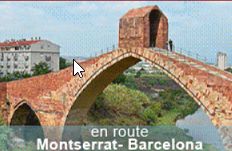
Montserrat, Barcelona
en routeMontserrat- Barcelona
Tower Bridge, London
Skip to content

CEATL – annonce (English version)

CEATL – annonce


The Centre National du Livre français embarks on a project for a literary translation school

04-02-2012 - Training and education | France

To satisfy the desire shared between French publishers and translators to train new generations of professional translators, particularly in the so-called ‘minority’ languages, and following the report commissioned from Pierre Assouline on The Condition of the Translator, the Centre National du Livre (CNL) has embarked on a project for a literary translation school with an international calling.

Based on ideas developed over many years by the Association des traducteurs littéraires de France (ATLF) and the Assises de la traduction littéraire in Arles (ATLAS), as well as experiments carried out by the establishment and its partners, CNL proposes an experimental programme of training for young French translators who have already published at least one translation and wish to acquire a deeper understanding of the practice.

Entrusted to Olivier Mannoni, the chairman of ATLF, this project seeks to develop an innovative educational approach based not on the teaching of a language but on the practice of translation. Based on the transmission of skills, it relies on professional translators who are proven and acknowledged for their excellence.

Unlike traditional courses, this one is arranged around two time-schemes: in the morning, professional training, involving everyone involved in the world of publishing: editors, translators, rights managers, members of the legal team…; in the evening, collective, interlingual work on the translation of texts, bringing together about fifteen translators representing up to ten or so languages. The collective work will be supervised by well-known members of the profession, who will make the participants work on texts in various language (each language being practised by at least two student translators), the purpose being to communicate elements of translation technique, from the handling of dialogue in a detective novel to research and the treatment of sources in a historical book, taking in the techniques of translating poetry, theatre or cinema.


The Centre National will welcome the first CNL/ETL session starting on 7 April 2012, every Saturday, lasting for twelve weeks. Course fees will be paid for by CNL. Any additional expenses are the responsibility of the participants.

Application forms can be downloaded from the site of the Centre National du Livre and should be emailed before 29 February 2012 to the following addressCNL-ETL@centrenationaldulivre.fr

Successful candidates will be informed by post from 15 March.

For further information: Florabelle Rouyer, creative writing department tel: +33 (0) 1 49 54 68 30.


Fred Vargas – Réponse de la traductrice à une critique (SUITE)

Talking of editors, readers may not always realize that translators are not the only people to have had a hand in the text. In a good publishing house, an editor (as distinct from the copy-editor, who comes later and regularizes spellings and other minor problems) will always read through the text, and ideally the editor will know the source language well. I have been very fortunate in my editors. For most of the Vargas books, my editor has been Geoff Mulligan. He has an eagle eye, knows French perfectly, and usually spots when I’ve left a word or even sentence out, queries mistranslations, and helps me avoid inadvertent sound repetitions etc. In any book-length translation all kinds of glitches are bound to occur, usually omissions. Of course, as we always agree, any mistakes or wrong calls that are left are my own.

            The ‘maguffin’. In the case of detective novels there is an additional hazard. The maguffin — shorthand for central plot element or clue – may be something difficult to translate. This has happened several times, and I have found ways round it, about which nobody has yet complained. It happens for example in The Three Evangelists, and is also a problem in the one I have just finished translating, L’Armee furieuse. Fred Vargas has a particular quirk, which is to pick up on apparently casual words or phrases and weave them in later, either as further red herrings or essential plot strands. Not wanting to issue spoilers, I won’t go into detail, but can do so in private!

            Now to some particular points: in order, the titles of the police;  the names of the police officers in Adamsberg’s squad; tutoiement; strength of expletives; and coffee bowls… I have kept the titles of the police (commissaire, commandant, lieutenant. etc,) simply because they don’t map exactly on to either UK or US police ranks, though they are easily comprehensible. Depending on the publisher’s house style, they may be italicized or not. As for their names, no, alas, I can’t change them to give them the resonance they would have for the French reader (Lamarre/ y’en a marre etc). I did allow myself a joke at the expense of Danglard (the Anglophile), by having him pronounce ‘Donglarde’ by the British policeman who speaks no French. I don’t know whether this works in the US, but ‘Dong’ is quite appropriate to Danglard in England, because of Edward Lear and the ‘Dong with the luminous nose’ who is a rather sad fellow in the poem (‘he goes, he goes’, in love with a Jumbly Girl who has sailed away).

            Tutoiement is a perennial problem in French novels: the moment two characters start to tutoyer each other can mark familiarity, contempt, a love affair, etc.  As a rule, I try to indicate by some inflection in the dialogue that greater familiarity has been reached. Sometimes just using first names will do it, but that depends entirely on how the novel has been written. In the case of Vargas, it is perhaps a reasonable assumption that many readers will have a little acquaintance with French practice (or other European languages) so that one can sometimes refer to it explicitly. But I put my hand up, in the Lucio example and others in the book, I could  and should have done more.

            Expletive deleted? As Nicole Dufresne notes, I’ve gone online about this before. Here’s my take on it in Vargas. Her novels, with a fantasy squad and plots based on medieval romance, are not realistic police procedurals, of the hard-boiled variety, where these days – and increasingly – the characters use language which would have been regarded as rather strong even twenty years ago. Yes, her cops say ‘Merde’ and ‘qu’est-ce qu’il fout maintenant’.  But they don’t for example (to take a word recently in the news in LA) say ‘putain’, or ‘bordel de merde’ etc. every couple of minutes.  They don’t on the whole blaspheme much either.  So sometimes, if it seems that the degree of annoyance is quite mild – the sort of thing children hear their parents say every day in France, I don’t always use the literal English word, saving it for more serious trouble on the whole.  It’s not that I’m particularly prudish, and I’ve recently translated a novel by someone else, where I’ve had to up the expletive count exponentially, in terms of quality and quantity. Still I think I could probably have been less wimpish in the example she quotes!

            Finally, coffee bowls. and under-translations: I wasn’t quite sure why Nicole Dufresne didn’t like these.  In the novel, there’s quite a lot about Adamsberg drinking coffee in his kitchen: he is an old-fashioned guy who uses filters, not a cafetière, let alone a Gaggia machine, and he drinks his coffee from a bowl, as my own family and friends in France do, and exactly as Professor Dufresne describes it. My son-in-law would never drink his breakfast coffee from anything else: a small bowl, the size of a large cup, into which you can dip your bread. But I can’t possibly translate this kind of ‘bol’ as ‘cup’ or ‘mug’, because they have handles.   Googling ‘coffee bowl’ or bol de café brought up many images of the same, and the term ‘bowl’ used in France doesn’t seem to bother anyone.  But I missed out on haut de gamme [top-of-the-range or top-drawer didn’t seem to do it for cops – so I went with top brass, which is a very English expression]; and I completely missed out on moisi.  Sorry! But thank you very much, Nicole, if I can do the equivalent of tutoiement in signing off, for a generous but constructive critique.


Siân Reynolds, Edinburgh, March 2012

Preserving the Human Factor in Translation

by James Nolan

James NolanDeputy Director, Interpretation, Meetings & Publishing Division, United Nations (ret);

Head of Linguistic Services, International Tribunal for the Law of the Sea (ret).

Mr. Nolan was our Translator of the Month in May 2013. He is the author of "Interpretation. Techniques and Exercises”, published by Multilingual Matters; (October 2012) and "Spanish-English/English-Spanish Pocket Legal Dictionary", Bilingual Edition, published by Hippocrene Books, (October 2008).


                     Nolan cover 2               Nolan book 1


For the benefit of our readers, Mr. Nolan has summarized an oral presentation he made to the Twenty-Sixth Annual Conference of the Carolina Association of Translators and Interpreters (CATI), at Cape Fear Community College – Wilmington, North Carolina – April 27, 2013. The summary follows.

Digitalization is dramatically shaping human communications and the media used to carry them, including communication across language barriers. But when language barriers are bridged by translation and interpretation, the cultural impacts go beyond the communication of messages because interpretation is not merely a communicative function potentially replaceable by technology but an art which plays a key role in human history by fostering inter-cultural understanding, transparency and tolerance.

Until recently, all translation was human translation because there was no other kind. Now, situations arise in which the need is felt to specify that we are talking about "human translation" [1] because verbally encoded outputs of computer algorithms are being produced and marketed as translations. Some of these products of artificial intelligence can be made to mimic self-conscious human thought and expression so convincingly that the effect is like finding a genie in a magic lantern and we could almost forget that what we are hearing is synthesized verbalization rather than articulated thought.

Globalization brought about a global village, making contacts between cultures ever more frequent and intense, creating pressure to resort to automated means of coping with the growing volume of communications. Now, with the digital revolution and advances in artificial intelligence, we seem to be moving towards a digital global village –automating or computerizing a growing number of human activities and through the use of programs or "apps" that mimic human faculties and cultural features, often without regard to whether the human element of the activity constitutes its essence and makes it a suitable or unsuitable candidate for automation.

In times when inter-cultural frictions and conflicts lead to acts of mass violence and terror, the human factor deserves more respect. While no one would deny, for example, that the process of packaging pharmaceuticals in a sterile robotic environment "untouched by human hands" is a technically sound way to perform the task, the question we now face is whether the process of transferring ideas, beliefs and feelings between human cultures can or should be done "untouched by human minds." I appreciate the practical uses of my smart-phone, but I have to ask myself how smart it would be to allow a device to begin doing my thinking for me. The human brain is still the most powerful computer, and the repository of some 300,000 years of evolutionary and historical experience, and it is the awareness of that cultural heritage that enables a translator or interpreter to extract the correct meaning from the context of an utterance in ways that eludes even the most advanced Machine Translation programs.[2]

What recent machine translation developments have in common is a failure to recognize that the activity they propose to automate is not an amateur pastime or a computer game but the world's oldest profession, one whose traceable origins in recorded history go back to about 3000 BC in Egypt, 2600 B.C. in Mesopotamia and 165 B.C. in China.[3]

INTERPRETER: Egypt, 3000 BC

More importantly, it is a profession based on mental processes that have been at the core of how civilizations grow and develop as far back as human memory can reach, longer in fact than some other professions that would not have developed as they have if language and communication had not developed ahead of them or in parallel with them. Cultures often grow through cultural borrowing –which is another way of saying translation– and translators and interpreters, as agents of that change, have often been the ones who built the bridges that enabled something new or useful to enter their cultures from abroad. A good example is medicine, which from its earliest times has owed many of its advances to underlying cultural processes of translation. [4] Yet, a recent article about European regulations that was discussed on a US translation agency blog reported that the pharmaceutical industry sees some translations as "a waste of paper." [5] One has to ask: If artificial intelligence and robotics developed to the point where it became possible to computerize medical practices, should we allow that to happen or would we be expunging the Hippocratic Oath and neutralizing the capacity for innovation that the history of medicine illustrates? And if computerization drains the vigor of translation and interpretation as a profession, such dehumanization may have a similar effect over time on medicine, law, education and other professions and disciplines that translation supports by providing links, forging connections and fostering cross-fertilization. The best translation (written or oral) draws on a deep understanding of human experience and the human condition from which insights and intuitions arise that shape the translation process in a creative way. We should take care to preserve those human insights and intuitions as an essential part of the craft of translation.

 —————

[1] See, e.g.: “The fact that translation is a largely invisible activity is not a problem per se; firms and administrations working in an international context still use it daily. On the other hand, the Directorate General of Translation (DGT) at the European Commission (and many experts and professionals that we contacted for this study), believe that by constantly remaining in the background, translation and especially human and professional translation may eventually be perceived as a superfluous activity, a cost that is not necessarily justified. If this perception were to spread among the citizens of Europe it could rapidly become a threat to European multilingualism, for which the translation activities in European institutions provide a solid base.”  Directorate-General for Translation. Studies on translation and multilingualism. Contribution of translation to the multilingual society in the EU (English summary) http://ec.europa.eu/dgs/translation/publications/studies/index_en.htm

[3 By estimation, the brain has about 100 million MIPS worth of processing power while recent super-computers only have a few million MIPS worth of processor speed.

http://library.thinkquest.org/C001501/the_saga/compare.htm

[4] Roland, Ruth A.  Interpreters as Diplomats: A Diplomatic History of the Role of Interpreters in World Politics (Ottawa, University of Ottawa Press, 1999, 209 p.)

[5] http://en.wikipedia.org/wiki/Ancient_Greek_medicine:

“Through long contact with Greek culture, and their eventual conquest of Greece, the Romans absorbed many of the Greek ideas on medicine.  (…) This acceptance led to the spread of Greek medical theories throughout the Roman Empire, and thus a large portion of the West. The most influential Roman scholar to continue and expand on the Hippocratic tradition was Galen (d. c. 207). Study of Hippocratic and Galenic texts, however, all but disappeared in the Latin West in the Early Middle Ages, following the collapse of the Western Empire, (…) After 750 AD, Muslim Arabs also had Galen's works in particular translated, and thereafter assimilated the Hippocratic-Galenic tradition, eventually making some of their own expansions upon this tradition, with the most influential being Avicenna. Beginning in the late eleventh century, the Hippocratic-Galenic tradition returned to the Latin West, with a series of translations of the Galenic and Hippocratic texts, mainly from Arabic translations but occasionally from the original Greek. In the Renaissance, more translations of Galen and Hippocrates directly from the Greek were made from newly available Byzantine manuscripts.” (bold font added)

[1] http://blog.fxtrans.com/2013/02/is-translation-waste-of-paper.html

Lina Choueiri – linguist of the month of January 2016

The following interview was conducted in English between Los Angeles and Beirut, Lebanon. 

Lina latest JJG
 Lina ChoueiriThe interviewee           Jonathan. G. – The interviewer   

                                                                                                                                         
LMJ : Where were you born and educated and in which languages?

LC : I was born in Mansourieh, in the Metn hills on the outskirts of Beirut. I began school before the age of 3, and studied French as a second language. In Lebanon, the choice of second language is important, because this is the language in which all subjects are taught: mathematics, science, history and geography were all taught in French. From the age of 9 through high school, I studied English as my third language for only about one hour a week. After obtaining the French BAC, I simultaneously completed undergraduate studies in two fields, in two languages and at two universities: mathematics in English at the American University of Beirut (AUB), and French literature at l’Université Saint-Joseph de Beyrouth (USJ).

Lina UAB           Lina USJ
                AUB                                                   USJ


LMJ : 
Where did you complete your university studies and in which post are you currently employed?

LC : After my master’s studies were twice interrupted by the civil war in Lebanon, I went to the United States to complete my education. First, I was a student at the English Language Institute, at George Mason University in Virginia.  I needed to improve my English, which had been of limited use while I was in Lebanon. Then, I completed a Master of Science in linguistics at Georgetown University followed by a PhD in linguistics at the University of Southern California. I took seven years to complete the doctorate, doing research and building contacts in my field, before I returned to Lebanon.


LMJ : 
What is your field of specialization?

LC : I am a grammarian and the subject of my doctoral dissertation was “The Syntax of Restrictive Relative Clauses in Lebanese Arabic”. I am currently Associate Professor of Linguistics in the Department of English at AUB.


LMJ : 
Does your expertise in Arabic grammar have practical application?

LC : The distinction between formal Standard Arabic and the spoken varieties of Arabic in the Arab world is well known. But what your readers may not know is that there is no body of research that describes or exposes rules or patterns of speech for each of the different dialects. This makes it difficult, if not impossible, for speech therapists, for example, to understand the characteristics of the spoken varieties of Arabic and to diagnose certain aspects of speech impairment in children. I have been collaborating with speech therapists in Lebanon for that purpose.


LMJ : 
You have mentioned the two universities in Beirut at which you completed your undergraduate studies simultaneously. If you were to examine the motives for which young Lebanese choose one or the other university, what would this tell you about their linguistic preferences?

LC : It is difficult to isolate language preferences when examining the motives for which students make their choice of university.  For example, AUB and USJ, both private universities, are among the top universities in Lebanon, but AUB is considerably more expensive than USJ.  This may be a major factor in the choice of university, since we have very little by way of financial aid for students. Also, entrance requirements to each of the two universities differ. So there is no easy, direct correlation between language preference and choice of university.  One of my masters’ students, who is conducting a study on language choice among university students, has found that more than one third of her participants at USJ studied English as their second language, while nearly half of her participants at AUB studied French as their second language.

The two universities are looking for diversity in terms of the socio-economic background of students, but not for language diversity. Therefore, this current situation is not the result of a concerted effort on the part of those two institutions.


LMJ : Can you tell our readers something about the rivalry between French and English in Lebanon? Was the Sykes-Picot agreement by which Lebanon was put under French mandate a turning point?

LC : There are few studies on the language situation in Lebanon. Here is a simple (maybe a little simplistic) sketch.  To some, the investigation of the multilingual tradition in Lebanon should take us back to the Phoenicians.  I will start with the Ottoman period, between the 16th century and the end of World War I, when Lebanon was a site for various forms of bilingualism among the small educated class, including Arabic-Turkish, Arabic-French, and Arabic-English bilingualisms.  Arabic-French and Arabic-English bilinguals during that period were more likely to be Christians educated in the (American) Protestant and (French) Catholic missionary schools established mainly in the second half of the 19th century.  While the presence of French in education predates the French mandate in 1918-1943, the latter established French as an official language of Lebanon.  This is when French spread across religions and sects.  The status of French as an official language was dropped when Lebanon gained its independence, and Arabic became the only official language.  More recently, we have been observing a decline in the privileged position of French as a language of education, while English has been on the rise.  It is still important to point out however, that multilingualism in Lebanon is very much an educational phenomenon.

LMJ : Has globalization tipped the balance in favor of English?

LC: It is true that English dominance throughout the world has not bypassed Lebanon. This can be seen in the increasing realization that English is an important language for the future of Lebanon and the Lebanese.  English is perceived to be the most important language for commerce/business, international relations, technology and science.  French is still regarded by many as a language of culture. But while few Lebanese would consider French more important than English, many of them would still consider knowledge of both French and English as important.  The fact is that Lebanon still publishes a daily newspaper in French and one in English (alongside many in Arabic), and while many universities and colleges use English as the main language of instruction, French has held its own in schools. On a personal note, my father pushed me to do my graduate studies in the USA, at a time when my French was much stronger than my English, because he thought that English would open up more career doors.


LMJ : What determines people’s preference for the 3 languages?

LC : [A partial answer can be found above, especially in relation to the division of labor between French and English.]

At the outset, I’d like to point out that, in addition to Arabic, Armenian, Kurdish, and Syriac are among the languages spoken at home by some minority groups in Lebanon. The Lebanese variety of Arabic is the first language of the majority of the Lebanese, the language they learn to speak at home. Standard Arabic is learned through formal schooling.  As I mentioned earlier, in school, most subjects are taught in a foreign language, usually English or French.  When parents choose a school for their children, they are in fact making a choice about the foreign language that will become their children’s second language.

When talking to parents of young children, I often hear the following argument for their choice of school: English is easy; it is everywhere, and necessary for future careers; our children are bound to learn it.  French is more difficult than English; to learn it well, our children should learn it at school.  Parents therefore lean towards choosing schools where French is the medium of instruction. I have heard this argument being made by parents who are francophone and by those who are not. 

The Lebanese may now perceive that trilingualism is the preferred option, but more research would be needed to answer this question more precisely.


LMJ : Do people regard French and English as colonialist languages?

LC : In a global perspective, French and English can certainly be viewed as colonialist languages; more locally however, as you can glean from the brief historical sketch provided earlier, the presence of French in Lebanon predates French colonialism in the region.  During the French mandate, which lasted a little over two decades, French became an official language and it spread more widely, but it lost its official status upon Lebanon’s independence. In that sense, Lebanon’s experience under the French mandate is different from that of other countries under colonial rule, where colonial languages kept their official status, and indigenous languages were assigned low prestige, long after those countries gained their independence.  Maybe the key difference is the role of Arabic in Lebanon, a high-prestige language with a long-standing cultural tradition, which remained closely tied to national identity.


LMJ : 
You were interviewed for a radio program of the BBC-PRI (Public Radio International, USA) entitled “Is Beirut the codeswitching LLINA signpostcapital of the world?". The specific type of code-switching referred to is the Lebanese habit of beginning a sentence in one language and ending it another. Another linguist interviewed for that program stated:

“The way people codeswitch in Beirut is unique. … A person in LA might speak Spanish at home and English at work. But in Beirut, “They're all Lebanese, talking with Lebanese, so why all this code switching? You’ll never see two French speaking to each other in German or in Spanish or Chinese, unless maybe there is a reason. But here, it’s a way of speaking in a sense.”

Do you agree with that analysis?

Traditional analyses of codeswitching have not done a good job at explaining this phenomenon, but those analyses are based on the assumption of monolingualism as a norm.  In such a context, codeswitching requires an explanation, since it deviates from the expected norm. In multilingual communities around the world, ‘mixed’ productions such as those of the young Beirutis are in fact very common; they may even be typical ways of speaking.  In my opinion, the Beiruti phenomenon would not be as unique as it is made out to be, if looked at from this perspective.


LMJ : Thank you for those very interesting insights. Of the many dozens of linguists we have interviewed on this blog, you are the first from the Middle East, and we hope you will not be the last.

LC : You are very welcome. I am delighted to have been able to share my experience with your readers.

—————–

Blog notes:

[1]  An Agreement signed on 16 May 1916 between France and the United Kingdom, represented respectively by François Georges-Picot and Sir Mark Sykes. The Agreement divided the spoils of the Ottoman Empire by apportioning spheres of influence between the signatories. Following the defeat of the Ottoman Empire, the Agreement was ratified at the San Remo Conference by the League of Nations, which entrusted the United Kingdom with a mandate over Iraq, Transjordan and Palestine, while France obtained a mandate over Lebanon and Syria.

[2] The Phoenicians are an ancient people that originated in the cities of Phoenicia, a region approximately corresponding to present-day Lebanon. The greatest known accomplishment of the Phoenicians was the creation of an alphabet which forms the basis of languages that later spread throughout the ancient world,  even if it was not itself the first language created.


12 August – the day Jean-Michel Basquiat died 27 years ago at the age of 27

 Our latest contributor, John Wellington is a New Yorker whose art finds its inspiration in Old Master paintings, religious and pop icons, cinema, music, and his fascination with devotion, idolatry and the use of male and female imagery in art and life.  He has shown in New York, Los Angeles, San Francisco, Miami, Paris and London.  His paintings may be seen on the website: johnwellington.com

John Wellington has recently released the first three volumes of Idols Demons Saints, a series of e-books based on his sketchbooks, showing the process of creating from the first inked line to a finished work of art. 
(See John Wellington : Idols, Demons and Saints by James F. Cooper)

John leads painting groups to Paris.

 Wellington re BasquiatBasquiat JW portrait

oil on aluminum, 48 x 25.25 inches
See explanation below of the painting's legend [*] 

John Wellington in his studio
See "Studio Visit" video below [**]

We are most grateful to Mr. Wellington for agreeing to write for the blog and for providing an artist’s perspective of Jean-Michel Basquiat, one that is more personal than could have been given by any art critic.


Wellington’s family name may conjure up British associations and Jean-Michel's name may sound quintessentially French, but both were born and raised in the United States. Basquiat’s father was Haitian and his mother was of Puerto Rican descent. So who was Jean-Michel Basquiat (1960–1988)? He was an American artist, musician, and producer. He first achieved notoriety as part of SAMO ©, [1] a graffiti tag used from 1977 to early 1980. It accompanied short phrases mainly painted on the streets of downtown Manhattan.  


Basquiat - Fight for Street Art


Basquiat developed from a graffiti artist to a painter of canvases. He was not quite as famous as his friend, Andy Warhol, but his neo-expressionist and primitivist works, which confronted issues of racism, identity and social tension, were displayed in galleries and museums internationally. 

He died in 1988 from an overdose of heroin and cocaine but his fame has not subsided since then. As only two examples of his continued popularity

–  the exhibition “Jean-Michel Basquiat: Now’s the Time”, presented for 3 months earlier this year at the Art Gallery of Ontario”, the first major retrospective of Basquiat in Canada, featuring about 85 large-scale paintings; 


Basquiat now's the time  Basquiat AGO


–  and the display of some of his works at the Galerie Bruno Bischofberger, Zurich,  whose owner was friendly with both Warhol and Basquiat in their lifetimes. 


Warhol, Basquiat & Bischofberger

[1] Signature associated with Jean-Michel Basquiat, derived from  "same old shit", abridged to "Same Old" then simply to SAMO.

Basquiat and me

When Jean-Michel Basquiat and I met in the Spring of 1975 he wasn’t famous.

Jean-Michel and my friend Eric were classmates at City As School (CAS), a high school for students that were better suited to a non-traditional form of education.  He and some other students from CAS had met up at Eric’s apartment overlooking Gramercy Park for the sole intention of getting stoned.  Jean-Michel, his classmate Shannon, and I all drew – especially comic book style art – and showed each other drawings in our notebooks.  Still, being a grade younger and having never smoked pot, I felt intimidated by this group that seemed not only older but cooler.  They were also into graffiti which I only dabbled in at I.S.70 (my junior high school at the time) tagging more of my textbooks than subways or walls.  Two years
Basquiat SAMOlater, Jean-Michel and his friend Al Diaz would gain underground notoriety by spraying their subversive SAMO© phrases across the walls of downtown Manhattan.

Our meeting remains a vivid memory for me not only being the first time I smoked, but because we were stopped by New York’s Finest and questioned while we were hanging out in Gramercy Park with pot and rolling papers in our pockets.  The police did not search us and eventually let us go back up to Eric’s home across the street.  That evening would be the only time that Jean-Michel and I would talk in his short life.
Basquiat RI Museum

Five years later, in 1980, while I was beginning my sophomore year at The Rhode Island School of Design, Jean-Michel had already become a star of the downtown music and club scene with his band Gray.

Basquiat Gray orchestra


He was known for the writings of SAMO©, starred in a fictional version of himself in the film New York Beat (later renamed Downtown 81), sold postcard art to his then idol Andy Warhol, lived as a homeless person in Washington Square Park, had his art showcased at the seminal Times Square Show, featured in a Blondie music video as a DJ, and given the basement of Annina Nosei’s gallery to produce paintings for his first solo show.

By the time I received a B.F.A. in 1983 and returned to New York to live in Greenpoint, Brooklyn, Jean-Michel had dated the soon to be famous singer Madonna and “The Radiant Child,” written about him by the poet René Ricard for ArtForum, brought him to the attention of the art world.  

Basquiat MadonnaBasquiat with AW


 with Madonna             with Warho

2:52 minutes


He painted a series of works in Modena, Italy, another series in a studio in Venice, California that Larry Gagosian had provided for him, and began showing internationally alongside some of the most famous artists of his time.  He had also produced a rap single with Rammellzee and K-Robb, and began what would be a two year collaboration of paintings with his mentor Andy Warhol. 

In 1985, while I was bartending at a restaurant on Upper Madison Avenue, Jean-Michel was featured on the cover of The New York Times Magazine, Basquiat - NY Times Magazinewearing a dark Armani (or was it Comme des Garçon?) suit – AND barefooted – for the article New Money, New Art: The Marketing of an American Artist.  He had also been making noteworthy art for five years and was widely recognized for his achievements.  While Jean-Michel was  becoming an international art star, I was trying to learn Old Master techniques of painting in my studio in Greenpoint and was still as much art student as artist.  The contrast of our lives was not lost on me.  I was in awe that someone so young could bring something not only new, but personal and vulnerable to the world of art.  There have of course been other artists like this.  Pablo Picasso painted Les Demoiselles d’Avignon when he was 26 years old, and Egon Schiele, like Jean-Michel had developed his signature style at the cusp of his twenties.  For me, still struggling with handling paint and trying to find my visual voice, Jean-Michel’s art and life were awesome in the true meaning of the word.

Although we never hung out again, I would see Jean-Michel at clubs like Area and Palladium in the mid 1980’s.  A friend from college had a VERY short romance with Jean-Michel, where she told me that on their first night, in the back of a limo downing bottles of Moët, he said how “used” he Basquiat studiofelt by the art world.  A year or two later, on August 12, 1988, he was found dead from a drug overdose on the top floor of the loft on Great Jones Street he had rented from Andy Warhol (who had died months before in 1987).  When I heard that Jean-Michel had died, I was working at Marvel Comics as a colorist, collaborating on graphic novels for artists such as Jean  Giraud AKA Moebius, painting on my days off, and starting an MFA program at The New York Academy of Art. Jean-Michel had painted studios full of singular art, lived a rock star’s life, and died, while I was still trying to just learn how to paint.

Wellington, Marvel comics   Marvel Comics graphic novel JW colored Wellington Moebius
for Moebius


Portrait  in gouache (an opaque water color) JW painted one night in 1998 during dinner at the home of Moebius                      


There have been a number of young masters but so many of them die young – especially at that Rock and Roll age of 27.  In contrast there are the slow learners, the goats that go up the hill one considered step after another.  We slow learners need all those extra years of living just to maybe catch up.  I finally sold my first painting at the age of 30, in 1991, a few months before the birth of my son.  Eventually I sold enough art to make it my profession.  Now in my 50’s, I still paint and sculpt almost every day.  My artistic vision over the years is telling its own story, and every now and then, I include a reference to Jean-Michel in my art.  I still have my copy of the New York Magazine article that featured him on a bookshelf in my studio.  It is the one magazine I will never throw out.

So often one is attracted to what is most like us, but just as often I am drawn to the opposite of my spirit in both art and life.  Jean-Michel created while high, staying up for a week at a time, then crashing for another week; scrawling, painting, and composing his angst, his humor, his skulls and his crowns on canvas and any other material that was available to him, and all beginning before his twenty-first birthday.  How could I have not been awed by him?     

John Wellington    

Blog notes : 
                                                                                                     

Wellington re Basquiat["] Inspired by the Black Madonna represented in Haitian art, John composed a Madonna clad in armor, holding a young Jean-Michel Basquiat.  “I’m not a real person.  I’m a legend.” was something Jean-Michel said a month before he died, when comparing himself to Marilyn Monroe, who was referenced in the song he was listening to - A Candle in the Wind by Elton John and Bernie Taupin.  There is a golden tattoo of a crown on the young boy’s right arm.


[1] "The 27 Club" or "Club 27" is the colloquial name given to a group of influential rock musicians that died at the young age of 27. There are a few "members" who are always listed in "27 Club" groupings – such as Jimi Hendrix, Jim Morrison and Kurt Cobain , and more recently Amy Winehouse  - while other musicians who were 27 at the time of their death are included sporadically.  Everyone on this list will never turn 28 – they will be forever 27.

Additional reading:

Basquiat through the Eyes of Fellow Artists on the Street
Brooklyn Street Art, April 2, 2015

‘Basquiat and the Bayou’ and ‘Jean-Michel Basquiat: Now’s the Time’
New York Times, June 25, 2015

Michel Nuridsany évoque la légende Basquiat
Midi Libre, 29/1/2015

Video documentary: 1:33 heures


Wellington in studio
[**] John Wellington – Studio Visit 
(6:51 minutes)
New York Academy of Art © 2013

Linguist of the month of September,
Shaul Ladany


Ladany 1`Shaul Ladany, 78, our interviewee of the month, qualifies as a linguist on account of his knowledge of 8 or 9 languages (in 3 alphabets – Cyrillic, Latin and Hebrew). But readers may find equal interest in a life-story filled with adventures and achievements (both scholastic and sporting). For this reason, in the following interview we have taken the liberty of departing from our usual focus on linguistic issues in order to present the unusual biography of an exceptional man.

Your intrepid blogger, Jonathan G., travelled to Beer-Sheva [1] in southern Ladany ben-gurion-university
Israel to meet Professor Ladany. The interview took place at the Ben Gurion University, where Shaul Ladany is professor emeritus of Industrial Engineering and Management. It was conducted in Hebrew, transcribed into English, and translated into French for www.Le-mot-juste-en-anglais.com


Ladany hands up

 LMJ: After the Nazis occupied Hungary in 1942, your maternal grandparents escaped the massacre by the Hungarian gendarmes of the Jewish population of their home town of Novi Sad (today in Serbia) but they were taken to the Concentration Camp at Auschwitz in 1944, where they were killed in the gas chambers.  Your own first encounter with the German war machine was in 1941, when at the age of 5, your house in Belgrade was bombed by the Luftwaffe, and you and your parents managed to survive by hiding in the underground washing room.  

What languages did you acquire while you were growing up in Europe?

SL: My mother tongue was Serbo-Croat and later I learned to write the Serbian variation in Cyrillic lettering and the Croat variety in Latin letters. I learned Russian at school. I learned German from my nanny and spoke to my parents in Hungarian. Later I was to come in contact with Yiddish speakers, and knowing German, it was not difficult to pick up Yiddish.


LMJ: When the Nazis overtook Yugoslavia, your parents fled to Hungary Ladany bergen-belsen and sent you to a Hungarian monastery for your own safety, but shortly after your 8th birthday, you were taken with your parents to the Bergen-Belsen concentration camp, from which few people returned. You actually entered the gas chamber, but you were reprieved at the last moment. You and your parents were extremely fortunate to be included in the 1,684 Jews released as part of the controversial "Blood for Goods" Laqdany kasztnerdeal negotiated by Rudolf Kastner [2] and Adolf Eichman [3]. Your parents returned with you  to Yugoslavia, to try to retrieve their property. The Communists were by then in power. In Ladany Eichmann,_Adolf1948 General Tito allowed you and your family to leave for Israel on condition that they forfeited all their property in favour of the State. How did you get to Israel? What were your first impressions of the country, which had gained independence only a few months earlier?


SL : I was nearly 13 years old. We left Yugoslavia on a cargo ship, with 3000 immigrants, and the journey took 2 weeks instead of 2 days. The ship nearly overturned at one point. We reached Israel, which was still recovering from the attack launched against it by the Arab armies of neighboring states the day after it had declared independence in May 1948. Due to the absorption of large numbers of Ladany immigrantsimmigrants, housing was scarce and the apartment we received, with no water or electricity, was very different from the luxurious residence to which my family had been accustomed in Belgrade before the War. My task in the initial period was to roam around the town with two buckets, looking for sources of water to fill up the buckets and then bringing them home. But I began school studies, and learned Hebrew, which became my new mother tongue, as well as English and French. My parents started different careers from scratch.


LMJ: On completion of your schooling, you studied at two leading institutions of higher studies, gaining one degree in Mechanical Engineering and another in Business Administration. You then went to Ladany columbia-university-logo1Columbia University in New York for your doctoral studies in Business Administration. You were invited to lecture at many universities throughout the world. You have many inventions to your credit, eight of which you have registered as patents. You have written dozens of scientific books, including the "English-Hebrew Dictionary of Statistical Terminology", which was published by the Israel Institute of Productivity, as well as many more scientific articles. When did sport become an important part of your life?

Ladany 4SL: I had been an amateur marathon runner, but during my doctoral years at Columbia I turned to competitive walking [4] and began to train for the 1968 Olympic Games, and after I received my doctorate I trained intensively for six months. I represented Israel in the1968 and 1972 games.


LMJ: The 1972 Olympic Games had been dubbed as "Heiteren Spiele", or "the Happy Games". But as we know, they ended in tragedy, when terrorists belonging to "Black September" forced entry into the Olympic Ladany 1972 victimsVillage and  penetrated the apartments of some members of the Israeli team, killing two outright and taking nine others hostage. The German government agreed to supply the terrorists with a helicopter   so as to allow them and their hostages to be flown to Cairo, but the terrorists machine-gunned some of the athletes and exploded the helicopter. In all, 11 members of your team were killed. How did you escape the attack?


SL: Our team was lodged in a building with apartment units side-by-side in Ladany Sun headline the Olympic Village, and five team-mates and I occupied a unit sandwiched between the two adjacent apartments that were attacked. I heard screams from one of the adjacent units and I ran to inform the team manager. The rest is history. The Games were stopped for 24 hours. The surviving members of the Israeli delegation were ordered to return home, contrary to my advice. [5]


LMJ: You have told us how you survived the bombing of your house at the age of 5, the death camp at the age of 8, the terrorist attack at the Munich Games – and you could have added the emergency landing of your plane when one engine ceased operating on a flight to Denmark. What other frightening experiences have you had?

SL: One experience that comes to mind occurred when I was in charge of an artillery battery in the Yom Kippur War of 1973. Shells were falling from all directions and after my soldiers had sought shelter in their bunker, I myself ran for cover at such speed that I think I must have broken the world record for the 100 meter run. 

In the recent Operation Protective Edge, I had to go down with colleagues and students to the University shelter when rockets from Gaza were falling on Beer-Sheva. Going into a shelter was bad enough but during a previous rocket attack, while driving in my car from my home to the University, I was forced to jump out of my car at the entrance to Beer-Sheva and protect myself against a wall as the rockets exploded around me.


Ladany medalsLMJ: You have won over 700 sporting awards, including that of World Champion in the 100 kilometers event at the Lugano Games of 1972. Your world record for the 50-miles walk has remained unbroken for over 30 years. What was your most difficult walking experience?

Ladany tubizeSL: The hardest walk was a non-competitive, four-day, 300-kilometer walk from Paris to Tubize, near Brussels. There is very little time for sleeping, which makes it more strenuous than any competitive 100 kilometer competition. I participated in that event 10 times and stopped participating only at the age of 74.


LMJ:  How much walking are you doing these days? 

SL:   I do a minimum of 15 kilometers a day. This weekend I will participate in a walk of 22 kilometers on very difficult, rocky ground. I also still take part in half-marathons.


LMJ: Do you find that walking sharpens your brain?

Ladany 2SL: Definitely. When we are exercising we have more blood, and hence more oxygen, flowing to the brain. My eureka moments always come when I'm walking. Jean-Jacques Rousseau has said it already. I have come up with mathematical models while I'm walking.


LMJ: Were any of your cups or plaques awarded for sporting achievements other than walking?


Ladany TiberiusSL: Yes, there is an annual event in which participants swim from one side of the Sea of Galilee [6] to the other. I have participated every year for 54 years, (wearing shoes, to traverse the stones at the beginning and end of the swim.) When I complete the swim, I walk back to my car, which I have parked near the starting point.


LMJ: I would like to end this interview with a linguistic question. If we regard Serbo-Crout as one single language, and add Russian, Hungarian, German, Yiddish, English, French and Hebrew, that makes 8 languages. What was the 9th language that you learned?

SL: When I was studying for my doctorate at Columbia University, I chose to do a course called "the language of mathematics". If you are willing to regard mathematics as a language, then I have acquired a respectable command of 9 languages. 


LMJ: Galileo, the great Italian physician, philosopher and astronomer, said: " La Matematica  è l'alfabeto in cui Dio ha scritto l' Universo " (Mathematics is the alphabet in which God wrote the Universe). So by that standard you may be regarded as having a command of a ninth language, too. We hope that you will continue to have a fascinating, but less dangerous life. To use a Biblical blessing : May you live to be 120.

 Ladany the language of mathematics

———————————————————–


Ladany Tel[1] Beer-sheva (in Hebrew , בְּאֶר שֶׁבַע , « wells of oath » or « seven wells », in Arabic بِئْرْ اَلْسَبْعْ Biʼr as-Sabʻ.  Based on archeological discoveries, the site of a nearby hill a few miles north-east of the modern city was occupied by humans since the fourth century B.C.  The site was destroyed and reconstructed several times in the course of the centuries.  (Wikipedia)


[2] Rudolf (Rezső) Kastner (Kasztner), 1906-1957, was an attorney, journalist and the leader of the Aid and Rescue Committee during the occupation of Hungary Ladany trainby the Nazis in the Second World War. He was also charged with negotiating with the SS leaders for authorization for 1,684 Jews to leave Hungary for Switzerland, in exchange for money, gold and diamonds, on what came to be called “the Kastner train”. Kastner knew 8 languages including Aramaic.


[3] Otto Adolf Eichmann  1906 –  1962) was a German Nazi SS Obersturmbannführer (lieutenant colonel) and one of the major organisers of the Holocaust. Eichmann was charged by SS-Obergruppennführer Reinard Heydrich with facilitating and managing the logistics of mass deportatiuon of Jews to ghettos and extermination camps in German-occupied Eastern Europe during World War II. In 1960, he was captured in Argentina  by the Mossad, Israel's intelligence service.

Kastner and Eichman both died in Israel, within 4 years of each other. Kastner was assassinated and Eichman was executed (the first and last person to be sentenced to death by an Israeli court).


Ladany shoes[4] The basic rule of competitive walking is that the competitor must have one foot touching the ground at all times. If the competitor appears to the judges to be running, he may be disqualified.


Ladany Spitz[5] Before the terrorist attack, the Jewish American swimmer, Mark Spitz, won 7 gold medals. After the attack, he took the first plane back to the U.S.A.

[6] Tubize (Tubeke in Flemish) is a commune of Brabant in the arrondisement of Nivelles (Belgium).

[7] The Kinnereth or Lake of Tiberius (also called the Lake Gennesaret or the Sea of Galilee) is 20 km long and 10 km broad, and more than 200 m below sea level. The name place derives from the Roman Emperor Tiberius who ruled the Roman province of Judea. It is the place where Jesus walked on water, according to Matthew 14:22-36.

Additional reading:


Ladany book 1

King of the Road: From Bergen-Belsen to the Olympic Games : 
the Autobiography of an Israeli Scientist and a World-record-holding Race Walker

By Shaul Ladany
Geffen Publishing, 2008


TEMP

  L'interviewé/e L'intervieweur/euse
1/20 Khoury
Christina Khoury
Jonathan (with glasses)
Jonathan G.
2/20

Moncrieff
Charles Moncrieff
(entretien imaginaire)

CaptureFindlay cropped

Jean Findlay

3/20 Hulse

La famille Hulse

Jonathan (with glasses)
Jonathan G.
4/20

Viktor LazikViktor Lazić


Jonathan (with glasses)
Jonathan G.

5/20


Aileen Clark
Aileen Clark

LMJ

6/20

Guenola Pellen
Guénola Pellen

LMJ


 7/20

Sharlee Bradley

Sharlee Bradley

Isabelle (shortened)
Isabelle Pouliot 
 8/20

Gian-Paolo

Gian-Paolo ACCARDO


Nathalie Greff-SantamariaNathalie
GREFF-SANTAMARIA

 9/20                    

Bulger 2
Anthony BULGER

ASIMIL
Éditions Assimil
10/20

Nicolas
Nicolas RAGONNEAU


Bulger cropped
Anthony BULGER
11/20

Mark thumbnail
Mark POLIZZOTTI
Première partie
Deuxième partie

Ella cropped thumbnail
Ella BARTLETT

12/20

Diane Murez (cropped) (2)
Diane MUREZ

Raia (thumbnail)
Raia DEL VECCHIO

test gallery


D'autres contributeurs et contributrices au fil de 2020:


Thibaut BOUEXIERE Magdalena Michele DRUON
Thibaut BOUXIERE Magdalena  CHRUSCIEL     Michelle DRUON
Nadine thumbnail Brian Harris Cindy
Nadine GASSIE Brian HARRIS Cynthia
HAZELTON
Tina Kover Jean Leclercq Le Fleur
Tina KOVER Jean LECLERCQ
Françoise
LE MEUR
Dominique snipped Rene Meertens Isabelle (shortened)
Dominique MATAILLET René
MEERTENS
Isabelle
POULIOT
Joelle cropped   Elsa Wack (snipped)
Joëlle VUILLE   Elsa WACK

The linguist (and musician) of the month – Christopher Goldsack

The following interview was conducted between Los Angeles and London.

 Christian Goldsack

Photo: Ian Cole


You graduated in physics from Cambridge University, but it appears that at an early stage you switched the focus of your interests to music.

Yes, I had always sung and been involved in choral music, at school and university, where there was a wonderful choral tradition. I studied Guildhall-school-of-music-physics and then trained as a teacher and embarked on a career as a school science and maths teacher. It was then that I started missing the high quality choral singing that I had been used to, so I started singing more for myself and chose to go to the Guildhall School of Music and Drama as an external student for private singing lessons. In the end I decided to indulge myself for a year and go to study singing for my own pleasure at the Guildhall as a post-graduate student – but soon realised that my heart would have me stay longer and stayed for three years.

You also had a love of the French language. Where did you learn the language and how did you develop your command of French?

I had been exposed to French early on, as my mother was Belgian, but I really developed my fluency in the language when I spent a year in the Swiss Alps before going to university, working as a supervisor in a small boarding school and enjoying plenty of skiing. Consequently my understanding of the language is very much an aural rather than a studied grammatical one. Bernac

My first singing teacher, whilst I was at Cambridge, had also studied with Pierre Bernac, so I was soon introduced to the rich diversity of French mélodie. As a lyric baritone my voice lent itself to much of the French repertoire too.

Once at the Guildhall I continued to work at the repertoire, but I was becoming aware that my background as a scientist had not actually prepared me for working with language and poetry and I was looking for a way to engage more deeply with the texts of the songs I was singing. For my first serious recital I prepared a programme for the audience, and I translated the texts myself. I engaged with the texts as I hadn't done before. I started translating texts as a way of exploring the poetry, but also as a way of engaging with songs that I might never actually sing, such as songs for female singers.

My first significant professional work came in France and I spent a year working for Opéra de Lyon. I took the translations with me and spent many a happy hour in the city library. Eventually I developed a body of work that I thought might be the beginnings of something worth publishing. I started approaching a few publishers, but it was the early days of the internet and already it was looking as though quite a lot of this would be freely available and I gave up on that idea. Eventually I decided to join the trend and use the internet as a platform for my own website.

In truth much of this work is a student project. I have occasionally come across a glaring error from the days that my understanding of the language was less than it is now. Ideally all the translations would be re-edited, but with my current professional commitments that is unrealistic. I am now checking any translations that I am asked about as and when they are needed.

What was your first contact with the musical scene in France?

With my interest in French music I felt I should explore the possibility of settling in France as a base and I started looking for opportunities to perform there. In my last year at the Guildhall I saw that the chorus master from Lyon was holding auditions for extra chorus members and I signed up for an audition. He was rather surprised that I should be interested in what was relatively lowly work and I explained my situation. It happened that he had the brief of locating a singer to take over in a student production of Ravel's L'Enfant et les Sortilèges. He suggested that I come to Lyon and study at the Opera Studio there, whilst supporting myself financially by working for him and doing small parts for the main company. It was a wonderful way to get started in France.

You now concentrate on education. How did you turn to education rather than performance as your main professional activity?

I did have a very successful start to my professional career. I won several major international singing competitions and worked for all the major opera companies in Britain. French was always an important part of my repertoire, but I was equally comfortable singing in other languages of course. Unfortunately I started having a few small health issues which interfered with my singing and availability for work. Initially I took some private pupils as a way of keeping me afloat and supporting my family (I have a wife, who is also a singer and teacher, and a daughter).

As part of your private work, you have created and directed choirs, and unusually, you have made the teaching of French song one of your major occupations. You have given classes in French song at the Guildhall School of Music and the Royal Academy of Music. This is an unusual specialization. Is there a demand for language coaches? Is French a popular language in the world of song?

Goldsack Promenade Choirs

I love working with young singers. As it became harder to support a professional career I took the conscious decision to change my professional focus to teaching. I had trained as a teacher and education is still in my blood. I started a youth choir as a way of bringing my experience to a wider circle of young singers locally to me. I now enjoy performing with the choirs as much as I ever did as a soloist. I deputise for local conductors and offer technical expertise to any choir that asks me for support.

I would ideally like to have a post at one of the London conservatoires, but that hasn't yet been forthcoming, though many of my private pupils have gone on to study there very successfully. I am, however, still recognized for my work in French repertoire and, as you say, am often asked to deputise as a tutor for French song classes at all the conservatoires. They all set up classes in the major singing languages as part of the learning process for students.


Is singing in English available to French students, or does English by and large not lend itself to choral singing or operas.

English is very much a singing language. Many French singers find it quite difficult to approach English, and indeed other languages, so coaches are needed. It is not something I have been called upon to do much… yet…

Your website contains "A Guide to Singing in French", containing quite technical guidance on matters such as diphthongs, semi-vowel glides, nasal vowels, etc. But could you explain to our readers in general terms the advantage to English-speaking students of having a Brit teach them French pronunciation as opposed to a Frenchman doing that.

When I was at Lyon I spent a lot of time gaining the acceptance of native French singers as an interpreter of French repertoire. I worked with local coaches to ensure that what I was doing with the language and pronunciation was above reproach, at least in song. Some of the highlights of my career were certainly the major international competitions that I won in France, singing French repertoire. I learned a lot about how language worked with music and above all the details of French phonetics. I have spent a lot more time analyzing the phonetics than any native speaker would do and, though after twenty-five years back in England I might not speak as fluently as I once did, I am very aware of the specific issues that many non-native singers have with the language. Interestingly, when I coach at the conservatoires, I frequently come across French singers who are really surprised when I start picking them up on the details of their own language. The language is evolving and there are aspects of the phonetics that are appropriate for songs and poetry that are now largely glossed over.

Your website contains translations into English of the works of Auric, Bachelet, Berlioz, Bizet, de Breville, Casterède and many other French composers and lyricists. I would like to ask you about these translations, but first let me define the terms literal translations, non-singable and singable commonly used in this field:

1)  Literal translations, sometimes also including pronunciation guides, to aid those singing or hearing the lyrics in the original language.  They do not fit the music, so they cannot be sung.  Usually they are not poetic in diction and are not in verse.  They are often found in program notes.  

2)  Non-singable verse translations, for those wishing to understand the original lyrics, but willing to sacrifice some literality in order to experience something of the poetry of the original.  These translations also do not fit the music and thus also cannot be sung. 

3)  Singable translations, that is, translations which can be sung to the original music, having the proper meaning, number of syllables, accents, and diction level, and (usually) versification reminiscent of the original and compatible with the music.  They are performed, sometimes in the United States, often in England.

So my question relating to your own translations is which category they fall into and what considerations have determined your choice.

They are literal translations. I am trying to make the language of this vast and diverse repertoire accessible to non-native speakers – singers and audience alike. I try to stick closely to the meaning of the text and word order, but occasionally I might change word order to clarify meaning.

There was a time when I would have laughed at the concept of creating a translation of a Debussy mélodie to be sung – but interestingly I did understudy a performance of Pelléas in Pelléas et Mélisande for English National Opera. It was such a success in bringing the work to the wider British audience that I have softened my view. Creating a worthwhile singing translation is the work of a poet, however, and one with a gift for music at that. I have written singing translations of some things for my choir – notably for Brahms' Liebeslieder Waltzes – but it is not something I find easy, and there are many who would to the job better.

Finally it might be worth saying a little about how I chose which songs to translate… I would often browse scores and recordings and come across songs that appealed to me. I have tried to cover all the standard repertoire, but add a selection of the broader repertoire too. The Casterède songs, for instance, are a wonderful but challenging cycle. The composer had been on the jury of a competition that I won. Afterwards he composed this cycle and sent me the score. The texts are by a poet called Alain Suied, whom I had known for several years through his association with a musical organization called Le Triptyque.

Because creating singable translations is difficult, the best known English lyrics of popular songs that were originally not in English are sometimes not translations at all.  Though they (usually) bear the same title as the original, they are entirely new English lyrics having only a tenuous relation to the meaning of the original. Some examples that come to mind are Edith Piaf's song "La vie en rose" and "Les Miserables".  Would you agree with that?

Certainly the best singing translations must be faithful to the spirit of the original, but be very natural in translation. This will often mean that the translation will differ markedly from the original. The nature of the French language compared to English, which has a much stronger rhythm, makes French vocal music much more fluid. However, even in translations this can make a significant effect. When I was at Lyon I was involved in the company's performance of Richard Strauss's Salomé, in the composer's own re-working of Oscar Wilde's original French text to his score. [1] Strauss spoke about the difficulty he had adapting the French language to his music, and the final opera feels quite different in French.

[1] Blog note:

Salomé is a tragedy by Oscar Wilde. The original 1891 version of the play was in French.  The play tells in one act the Biblical story of Salome, stepdaughter of the tetrarch Herod Antipas, who, to her stepfather's dismay but to the delight of her mother Herodias, requests the head of Jokanaan (John the Baptist) on a silver platter as a reward for dancing the dance of the seven veils.