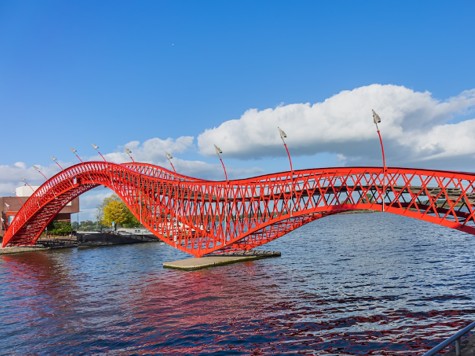
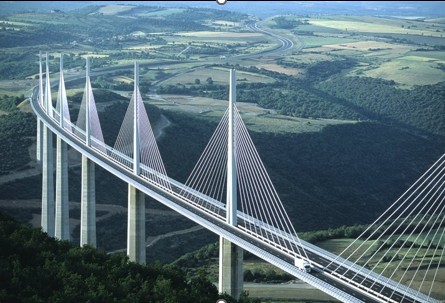
Pont vivant d’Umshiang, IndePont aux pythons, HollandeViaduc de Millau, FranceEn route Montserrat – BarcelonaPont de la Tour, AngleterreJapanese Gardens, Pasadena California
L’esprit du site
Un pont entre deux cultures.
Un blog destiné aux francophones qui s’intéressent à la langue anglaise.
Un pont entre le monde francophone et la culture anglo-américaine.
À lire maintenant
Derniers articles
Langue, traduction, histoire et création — une sélection à parcourir librement.
Une collection sauvée des archives d’Internet, entièrement reconstruite et de nouveau ouverte à ses lecteurs.
Après une pause, Le mot juste en anglais est de retour — sauvé des archives d’Internet et entièrement reconstruit. Nous sommes ravis d’être de retour et reconnaissants que vous nous ayez retrouvés. Mais soyons honnêtes : nos portes sont ouvertes alors que nous sommes encore en train de réparer le toit. Il se peut que certaines images manquent, que quelques anomalies de mise en page datant de nos années sur TypePad soient encore en cours de correction, et qu’un lien rompu que nous n’avons pas encore repéré se cache quelque part.
Le mot juste en anglais a été créé il y a environ 15 ans afin d’ouvrir une fenêtre aux lecteurs français intéressés par la langue anglaise – avec toutes ses singularités et ses difficultés – et, plus généralement, par la culture du monde anglophone. Le blog avait pour vocation de servir de passerelle linguistique et culturelle entre le monde francophone et le monde anglo-américain. Ces dernières années, le blog a fait une pause (en partie à cause de la fermeture soudaine de Typepad, la société qui fournissait le logiciel). Nous sommes actuellement en train de remettre en ligne Le mot juste en anglais (ainsi que notre blog en anglais Wordsmiths Blog), afin que les internautes puissent accéder à l’importante collection d’articles existants, même si nous ne publions plus de nouveaux articles aussi fréquemment qu’auparavant.
À propos de Jonathan Goldberg
Votre bloggeur fidèle est traducteur et interprète assermenté auprès du Judicial Council of California (hébreu/anglais, français/anglais). Il a vécu sur quatre continents et a passé un an à Paris, où il a obtenu un diplôme en Civilisation française de la Sorbonne – un cas d’opsimathie, vu le fait qu’il n’a jamais appris le français à l’école ni pendant ses années d’études précédentes en droit. Il a été membre du Barreau d’Afrique du Sud et du Barreau d’Israël. Il a traduit en anglais RÉVOLUTION d’Emmanuel Macron.
Il ne faut pas le confondre avec un autre Jonathan encore plus ancien – la tortue (âgée de 192 ans), le plus vieil animal terrestre du monde, en confinement sur l’île de Sainte-Hélène (comme Napoléon autrefois). Les deux (Jonathan & Jonathan, et non Jonathan et Napoléon) se sont rencontrés lors d’une visite de l’île effectuée par votre bloggeur.
Jonathan the turtleJonathan Goldberg
Jonathan le grand et Jonathan le petit — réunis sur l’île de Sainte-Hélène.
Julia Frey est le pseudonyme de Julia Bloch Nolet, notre invitée spéciale. Ce billet a été écrit tout spécialement pour Le-mot-juste-en-anglais.com. Titulaire d'un doctorat de français de l'université de Yale, Julia est l'auteure de la biographie Toulouse-Lautrec: A Life. Elle partage sa vie entre Paris et la Côte d’Azur. Son blog, Amuse Bouche, présente aux anglophones un aperçu de la vie en France et de la langue française.
Warning. You can wish someoneJoyeux Noël, Joyeuse Saint-Valentin,orJoyeuses Pâques, but you don’t say “Happy Bastille Day”…
Or Bastille Day at all. In France, the national holiday is called la Fête Nationale française (abbreviated Fête Nat. on calendars) or more simply le 14 Juillet. So, I asked Isabelle and Colette, how come English speakers call it Bastille Day and the French DON’T? This apparently innocent question opened up a can of worms (which the French would call “un guêpier”—a hornet’s nest—or “unsac de noeuds”—a bag of knots). My friends had lots of theories on the matter. Although nobody seems to know who first used the expression in English, they both thought a reasonable explanation is that French and non-French alike recognize the taking of the Bastille as the beginning of the French Revolution, and a symbolic victory for “les droits de l’homme” (human rights).
On the other hand, the actual date, July 14, doesn’t mean much, especially when stacked with all the other French fêtes known only by their dates (1er Mai, 8 Mai, 11 Novembre etc.). Which leads me to an aside: the names of months generally are not capitalized in French, but if they refer to a “fête” (holiday), they are capitalized because they’re considered proper names. Fêtes named for saints are feminine even if the saint was male, because it’s “la fête de…,” thus laSaint-Valentin (Valentine’s Day). Most fêtes identified by their dates are laïques (lay, nonreligious), and commemorate solemn historic occasions (battles won, wars ending, etc.), whereas religious holidays usually have real names: Noël (Christmas), Pentecôte (Whitsunday), Pâques (Easter). Even though France is un état laïc (a country with separation of church and state), it’s striking that Noël, Pâques, la Pentecôte, l’Ascension, l’Assomption and la Toussaint (All Saints’ Day) are all national holidays. In fact the French have an amazing number of legal holidays, eleven in all, four of which usually fall in May, which explains why you can never get anything done in May.
Now back to what I was saying… LaFête Nat. is probably called “Bastille Day” in English because “Bastille” is a brief, concise and unambiguous reference to the storming of the prison of the Bastille in Paris on July 14,1789, by 954 men and one woman, armed with pikes and miscellaneous firearms, yelling “Tous à la Bastille !” (Everybody out of the pool).
The actual event was a little disappointing. After a short battle, the nonmilitary governor in charge of the fortress, by then mostly being used as a hospital, simply gave up. When the victors finally made their way down to the “dungeons,” which turned out to be spacious, almost luxurious, they discovered there were only seven prisoners left in the place. The others, including the Bastille’s most famous inmate, the Marquis de Sade, had been transferred somewhere else shortly before. Disappointed, the conquerors dragged an old suit of armor and a printing press out into the courtyard, to be displayed as instruments of torture.
Despite rumors to the contrary, the Bastille was not ripped stone by stone from its foundations by the angry crowd. A contractor named Palloy was hired to dismantle it. Most of the stones were recycled to build a bridge, the Pont de la Concorde. He made money on the side by selling rings set with chips of stone from the walls and patriotic medallions hammered out of the fortress’s iron chains.
So why did the populace attack the Bastille? Because the Bastille symbolized Royal tyranny. Ancien Régime (pre-Revolutionary) France was an absolute, at times despotic, monarchy, ruled en l’occurrence (in the event, i.e. at that time) by Louis XVI . The King could arbitrarily lock up anyone he wanted, whenever he wished, without any stated reason, by simply creating a “lettre de cachet.” These notorious letters were a particularly French phenomenon, thus the term is untranslatable, although cachet in this context means the royal seal. The most infamous lettres de cachet ordered the indefinite imprisonment or exile, without trial, of the individual named therein. The verb describing this behavior? Embastiller (to put into the Bastille), of course.
Even in Paris today, you frequently hear “Tous à la Bastille !” when there’s unemanifestation populaire. Careful, warns Isabelle. Do not translate this as “a popular manifestation.” The noun would be “demonstration,” and it’s populaire in the sense of du peuple, i.e., a street protest by left-wing, usually working-class dissidents who feel their constitutional rights have been violated. Recently, this battle cry has been heard in support of “les sans-papiers” (the “without papers,” i.e., illegal immigrants) and at a general strike against attempts to raise the retirement age in France from 60 to 62. U.S. citizens are more grégaires (sheep-like, not gregarious), having accepted the advance from age 65 to the current 67.5 without so much as a murmur.
I was surprised to learn that officially, le 14 Juillet does NOT celebrate the 1789 storming of the Bastille. It commemorates la Fête de la Fédération, organized on the same day in 1790, one year later. That night, Paris, in the presence of Louis XVI and Marie-Antoinette, partied on the Champ de Mars to celebrate the success of a peaceful revolution and the principle of a constitutional monarchy. Bad guess. The revolution continued, ever more violent, until Napoléon Bonaparte became Premier Consul nine years later in 1799. Nonetheless, the Fête de la Fédération was renamed la Fête Nationale française in 1880. Virtually everybody in France will tell you, though, that le 14 Juillet commemorates la prise de la Bastille (the capture of the Bastille). “On nous a bourré le mou avec ça dès l’école primaire,” says Colette. Quoi ?Mou, it turns out, means the lungs of a butchered animal, and the expression bourrer le mou à quelqu’un means to feed someone false information.
In any case, like the rest of us, the French are always happy to have un jour chômé (a day off). Early on the morning of July 14, there’s a défilé militaire(parade), with soldiers marching to La Marseillaise, the French hymne national (national anthem). In Paris, the French Air Force loudly buzzes the Champs Elysées, spewing exhaust smoke tinted bleu-blanc-rouge (the colors of the French as well as the U.S. flag—the “blue, white, red” in France, the “red, white and blue” en Amérique). Before dark thousands of Parisiens arrive at the Champ de Mars in time to picnic on the grass and crane their necks past la Tour Eiffel to look at le feu d’artifice du 14 Juillet—the spectacular fireworks set off from the Trocadéro, across the Seine.
One final warning! The French are amused or shocked or both by the blatant chauvinisme (nationalism) of Americans, by the Stars and Stripes dangling from our houses. As my friends remind me, “on n’est pas si patriotes que ça” (We’re not as patriotic as you Americans). La Fête Nat. is just another vacation day. In short, you can wish someone Joyeux Noël, Joyeuse Saint-Valentin, Joyeuses Pâques, and so on, but you don’t wish people Happy Bastille Day, in either English or French. When it first came into existence in 1880, a few noble families, including that of the artist Henri de Toulouse-Lautrec, flatly refused to recognize the holiday. To them, it symbolized the decapitation of some of their favorite relatives. Even today, one or two Royalists are still waiting for the Monarchy to be restored.