LMJ: Quelle première expérience professionnelle vous a orientée vers la carrière de traductrice?
Adriana: I worked on the periphery of the film industry, helping with administration for a small film festival in the South of France. This gave me opportunities to work as an interpreter between English-speaking directors or actors and the local French-speaking audiences and journalists.
LMJ: Votre premier emploi à plein temps vous a-t-il donné l'occasion de travailler en français ?
Adriana: Yes, I worked as a press officer on a number of French films, which meant translating the press pack and working closely with French directors and actors. My next job, with a book packaging company, was also useful. Packaging, in this context, means identifying promising, as yet unwritten books and putting together a "package" (a synopsis and some sample material) to market these book ideas to publishers. Later, when I wanted to "sell" a French book and/or my translation skills to a publisher, I used this technique, packaging a synopsis in English with some sample translated material from French.
LMJ: Quel est le premier ouvrage que vous avez traduit ?
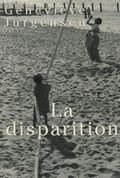 Adriana: A heartbreaking autobiographical book called La Disparition (The Disappearance) by Geneviève Jurgensen. I was bowled over by it and felt very strongly that more people needed to read it… and that I could make that possible by translating it into English. Using the "packaging" technique, I approached about ten British publishers and – after several months and many rejections – Philip Gwyn Jones, then at Flamingo books, commissioned and published the full translation.
LMJ: Comment êtes-vous parvenue à surmonter les obstacles qui empêchent tant de candidats traducteurs de travailler à plein temps d'en faire leur gagne-pain ?
Adriana: I've been very lucky in that the work has kept coming and I have my three children to thank because I wanted to be a stay-at-home mother. They were born over a span of 7 years so, for more than 10 years, there was no question of my going out to work. I love translation and it dovetailed into my primary role as a mother.
LMJ: Il semble qu'à partir du moment où vous avez commencé, vous n'avez plus jamais regardé derrière vous. Vous avez une bonne cinquantaine de traductions à votre actif. Plusieurs d'entre elles ont été retenues dans la sélection de prix prestigieux comme l'Independent Foreign Fiction Prize, le Kiriyama Prize, le French-American Foundation et le Florence Gould Foundation Translation Prize, le Marsh Award for Children's Literature in Translation, et le Scott-Moncrieff Prize, que vous avez remporté en 2011 (pour votre traduction de Bord de mer de Véronique Olmi, devenu Beside the Sea et paru chez Peirene Press, en 2010). Dans quelle mesure, les jurés de tels prix tiennent-ils compte de la part de l'auteur et de celle du traducteur dans le choix des œuvres qu'ils retiennent ?
Adriana: In most cases the prize is given to the translator, so the focus is on the translation, although of course the quality of the source text is very important. Translation can be a bit like tennis: when the original author is very good you raise your game. In the case of the Independent Foreign Fiction Prize the prize is divided equally between the winning author and translator.
LMJ: Revenons à Beside the Sea. J'ai cru comprendre que vous aviez traduit ce livre dans des circonstances inhabituelles. Dites à nos lecteurs comment vous avez passé un mois à la Villa Gillet [1].
Adriana: I had no luck finding an English language publisher for Bord de Mer with my packaging method, but I just couldn't give up on this powerful book. The Villa Gillet in Lyon offers several 4-week residencies to translators every year, and I was lucky to be a successful applicant in 2006. One of the prerequisites of the residency is that you work on a commissioned translation. At the time I had two substantial translation contracts so I could prove I was a bona fide translator, but I asked the Villa Gillet to allow me to translate Bord de Mer because it was a book I believed in and I felt the residency gave me a golden opportunity to translate it without making too much of a dent in my income stream. They very graciously agreed.
Sadly, their indulgence and my commitment to the book didn't bear fruit
immediately, but two years later I met Meike Ziervogel, founder of the brand new Peirene Press, which was yet to publish its first book. Meike was as taken with the book as I had been, and she fast-tracked it to be Peirene's first publication. Our confidence was justified when the translation, Beside the Sea, was chosen as The Guardian newspaper paperback of the week and went on to win the 2011 Scott-Moncrieff Prize, and to be long-listed for the 2011 Independent Foreign Fiction Prize.
LMJ: Êtes-vous en contact avec les auteurs des livres que vous traduisez ?
Adriana: I always like to make e-mail contact with the author. Once I am close to a final draft, I might submit a list of queries, and I make a point of sending my completed translation to the author at the same time as sending it to my publisher, although some publishers put up resistance to this. With one book – the deeply personal and moving Le Fils by Michel
Rostain – the author was unable to read my translation until the night before its launch earlier this year. I was gratified and relieved (particularly because his English is very good) when he said he wouldn't have changed a word.
LMJ: Combien d'autres auteurs dont vous avez traduit les œuvres avez-vous rencontré ? À quel stade du processus cela se produit-il habituellement ?
Adriana: I have met only about half a dozen, usually on the occasion of the
book's launch. But there's one major exception: Agnès Desarthe.
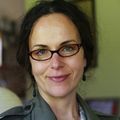
Agnès Desarthe
I've translated four of her books and she's not only a very talented author but also an English-French translator. We've had a lot of fun discussing language together and going through my translations of her work, and we've become friends.
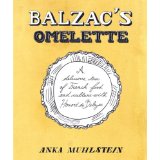
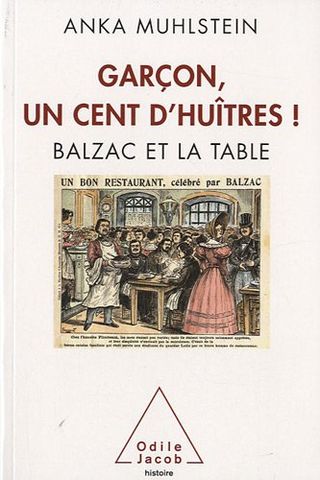 LMJ : Si nous prenons l'une de vos plus récentes traductions, Balzac's Omelette d'Anka Muhlstein, une livre que nous avons beaucoup aimé, il semble que cette œuvre ait exigé un savoir exceptionnel de l'auteur et de sa traductrice en matière d'art culinaire.
Adriana: Speaking for myself, I can only claim to be an enthusiastic amateur cook, but this was not a handicap in translating the book.
I did, however, encounter an entirely different problem: Balzac's works are quoted at length in the book, and for reasons of copyright, I could use only English translations of his work that were in the public domain. Some were of very poor quality and occasionally did not even support the point that the author was making. I was able to get around this by translating those extracts myself (indicating the fact to the reader).
I loved translating this book because the writing is so fluid and lucid, and I was very lucky to be able to meet Anka and her husband when they visited their son and daughter-in-law who happen to live fairly close to me in England. I brought an offering of ginger and almond macaroons I had baked as a modest homage to the author of such a "delicious" book.
Anka's command of English is truly commendable, so I fear she may decide to write future books in English, and I would then be deprived of the opportunity to translate for her again, something I would be delighted to do.
LMJ: Pour prendre un autre exemple sur la longue liste des écrivains à qui vous avez ouvert le monde anglophone, je note que l'auteur de "Scandalous" est une mystérieuse "Laura D."
Adriana: The book is an autobiographical work about a student who pays for her university education by working as a prostitute. I never knew her true name, but the publisher's name, Virgin books, is an ironic coincidence.
LMJ: Parlez-nous de votre plus récente activité, consistant non pas à traduire, mais à expliquer au public ce qu'est votre profession.
Adriana : On August 7, the author Naomi Alderman presented a radio show discussing issues relating to literary translation from the point of view of translated authors and translators. I was one of three translators invited to join the discussion and to contribute to a "translation slam", defending my translation of a few paragraphs from Jules Verne's Around the World in Eighty Days in comparison to the other translators' versions. The show was broadcast in BBC Radio 4, under the title "The art and craft of translating fiction".
LMJ: Dans le sillage d'une aussi brillante carrière, quels sont vos projets à très court terme ?
Adriana: I'm off tomorrow to the Edinburgh International Book Festival, to participate in a translation slam in front of a live audience. These slams are becoming popular events, they're great fun and it's fascinating dissecting a text and exploring the reasoning behind the different versions produced by two translators.
Annonce du blog :

Anka Mulhstein
En préparant cet entretien avec Adriana Hunter, nous lui avons réservé une petite surprise. Nous avons demandé à Anka Mulhstein, l'auteure de « Garçon, un cent d'huîtres ! : Balzac et la table » [2] qu'Adriana a traduit par Balzac's Omelette : A Delicious Tour of French Food and Culture with Honoré de Balzac de nous dire ce que fut sa collaboration avec Adriana. Voici ce qu'Anka nous a répondu :
Donner un livre à traduire, c’est un peu le jeter au fond d’un lac. Si on ne connaît pas la langue d’arrivée, impossible de juger de la traduction. On croise les doigts, on considère avec satisfaction son nom en chinois, en japonais ou en allemand, et on espère que le texte original aura survécu à la baignade. Le livre ne refait surface que si l’on comprend la traduction. Mais alors un autre problème surgit. Ce texte habillé de nouveaux mots, de tournures différentes est-ce bien le nôtre ? Grâce à Adriana, je n’ai jamais eu d’inquiétude. Adriana est une remarquable traductrice parce qu’elle est une lectrice si attentive et si exigeante. Elle saisit la moindre nuance mais elle remarque aussi la moindre inconsistance, la moindre obscurité et, qualité inappréciable, si elle a le moindre doute, elle pose la question à son auteur. Mon texte anglais est non seulement fidèle, mais plus précis. J’adore travailler avec elle !
A.M.
[1] Notes du blog :
La Villa Gillet, située dans le parc de la Cerisaie, 25, rue Chazière à 69004 Lyon, se veut un laboratoire d'idées. Des artistes et des penseurs s'y retrouvent périodiquement afin de réfléchir ensemble aux problèmes
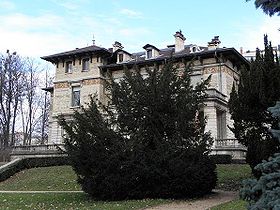 du monde contemporain. Le bâtiment fut construit en 1912 par l'architecte Joseph Folléa pour de riches industriels lyonnais, la famille Gillet. En mai de chaque année, s'y tiennent les Assises internationales du Roman. Notons que, depuis 2011, la Villa Gillet organise à New York, le festival "Walls & Bridges – Transatlantic Insights" qui entend instaurer un dialogue entre penseurs et artistes français et américains.
[2] ainsi que Victoria : Portrait de la reine… (1981); La Femme soleil : Les femmes et le pouvoir. Une relecture de Saint Simon (1976); Manhattan. La Fabuleuse Histoire de New-York, des Indiens à l'an 2000 (1986); Cavelier de La Salle, l'homme qui offrit l'Am érique à Louis XIV (1992) Astolphe de Custine (1790-1857) : Le dernier marquis (1996); Reines éphémères, mères perpétuelles (2001); Elizabeth d'Angleterre et Marie Stuart : Ou les périls du mariage (2004); Napoléon à Moscou (2007); Cécile Muhlstein : 1936-2007 (2011) et, en anglais, Baron James: The Rise of the French Rothschilds (1984); Monsieur Proust's Library (2012); Venice for Lovers (2012); La Salle: Explorer of the North American Frontier (à paraitre en livre de poche 2013).